
The History of Chinese Pinyin

Thursday, January 12, 2023

Chinese Pinyin, also known as Hanyu Pinyin, is the official romanization system for Standard Chinese. It was developed over a long period of time and plays an important role in helping learners read and pronounce Chinese.
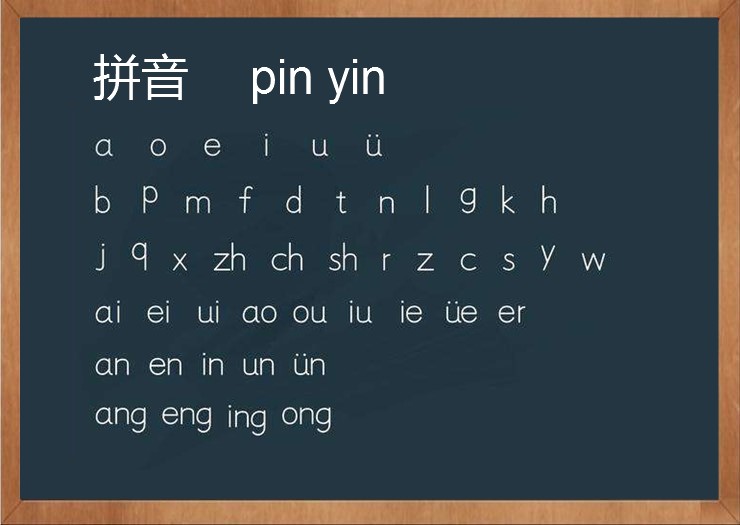
Pinyin Picture

Chinese pinyin is the Latin scheme of Chinese phonetic notation officially promulgated by the people's Republic of China. It refers to the phonetic syllables of Putonghua, which is a standard pronunciation of modern Chinese, spelled with the letters and spelling specified in the Chinese Pinyin scheme. During the character reform from 1955 to 1957, it was studied and formulated by the Chinese Pinyin scheme Committee of the former China character Reform Commission (now the national language and character working committee). The Pinyin scheme is mainly used for the annotation of Mandarin pronunciation, as a Mandarin phonetic symbol of Chinese characters. The National People's Congress approved and promulgated the plan on February 11, 1958. In 1982, it became the international standard ISO 7098 (spelling of Chinese Roman letters). Some overseas Chinese areas, such as Singapore, use Chinese Pinyin in Chinese teaching.

Chinese pinyin is a tool to aid the pronunciation of Chinese characters. Article 18 of the law of the people's Republic of China on the national common language stipulates: "the Chinese Pinyin scheme is a unified standard for the spelling of Chinese names, place names and Roman letters in Chinese documents, and is used in areas where Chinese characters are inconvenient or unusable." The symbols written according to this set of specifications are called Hanyu Pinyin.

Chinese pinyin is also the internationally recognized modern standard for Chinese Latin transcription. The international standard ISO 7098 (spelling of Chinese Roman alphabets) states: "the Chinese Pinyin scheme officially adopted by the National People's Congress of the people's Republic of China (February 11, 1958) is used to spell Chinese. The writer records its pronunciation according to the Putonghua pronunciation of Chinese characters."

Sign up for a free trial now!

FAQ / Tips

We offer highly flexible class schedules that cater to your needs, with lessons available from 7am to 10pm Beijing time, seven days a week.This allows you to conveniently take lessons at any time and from any location that suits your schedule.
We offer secure and convenient payment options, including PayPal. PayPal is a widely recognized and trusted online payment platform that provides a secure way to make transactions. We also follow industry-standard security protocols to ensure the safety of your personal and financial information.
We offer a 30-day money-back guarantee for all new students.If you are not satisfied with our services within the first month, you may cancel your lessons and receive a refund for any unused lessons.We will only charge you for the first month of lessons, and refund the remaining balance to you promptly.Our goal is to ensure your satisfaction with our services, and we strive to provide the highest quality of instruction and support to all of our students.
If you have any questions or concerns, you can send an email to: service @chineselearning.com.We have a team of professionals who will be happy to assist you with any issues as soon as possible.
No, the tuition fees you have paid cover all costs.There are no additional fees or hidden charges. We strive to be transparent and upfront with our pricing, ensuring that our clients receive the best value for their investment.
Our instructors are highly skilled and experienced experts in Chinese language teaching, with proficiency in multiple languages. They hold at least a bachelor's degree in teaching Chinese as a foreign language, and possess extensive teaching experience and knowledge. Through a rigorous selection process and ongoing training, our instructors are equipped to provide students with authentic pronunciation, accurate language usage, and cultural background knowledge, all of which are essential for achieving mastery of the Chinese language.