
Everyone loves delicious food. So when we recommend or mention a particular dish to others, we inevitably have to say its name. Some food names are often misread by people. Let's take a look and see if you've been pronouncing these names correctly.
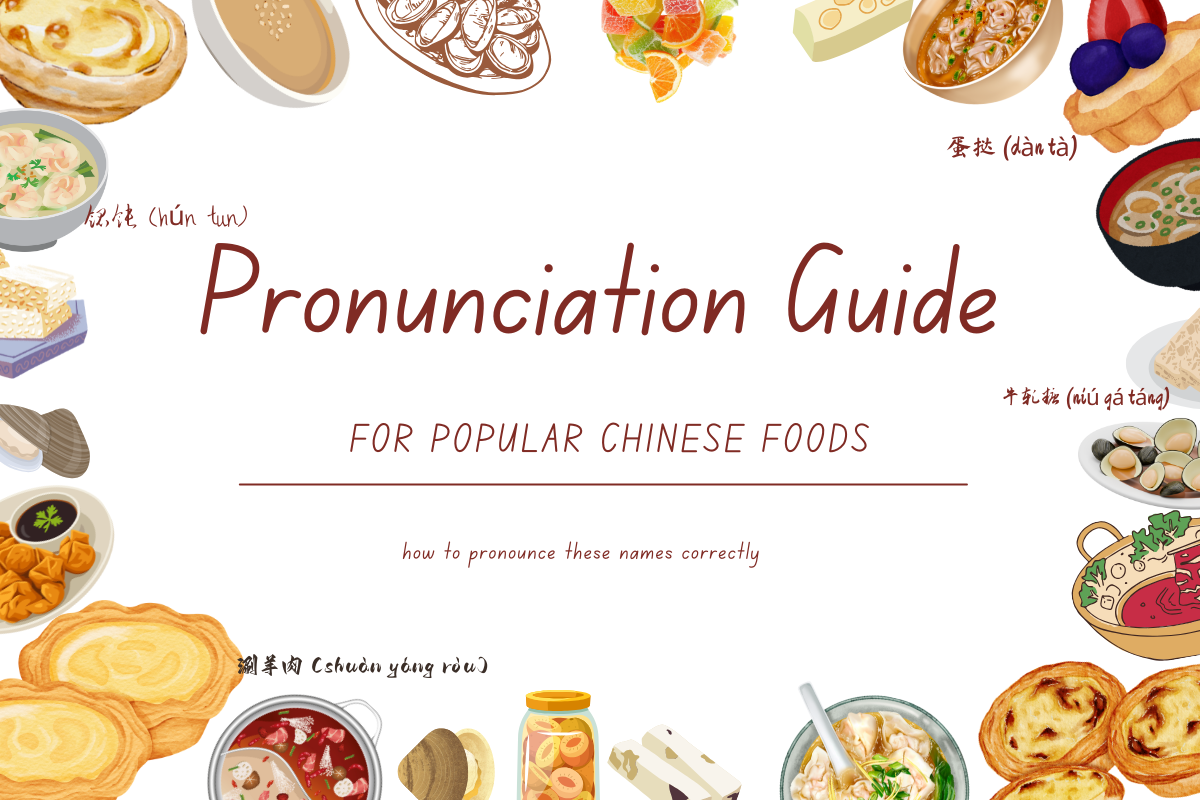
蛋挞 (dàn tà)
- Common Mistake: dàn tǎ
- Reason: The character "挞" is pronounced as "tà," meaning "to whip or strike," as in "鞭挞 (biān tà)." Many people mistake it due to the influence of the character "塔 (tǎ)."
- Example:
The freshly baked egg tarts are extremely delicious.
刚出炉的蛋挞,特别好吃。
gāng chū lú de dàn tà,tè bié hǎo chī
醪糟 (láo zāo)
- Common Mistake: liáo zāo
- Reason: The character "醪" is not commonly seen, leading many to misread it with the first part of "廖 (liào)." However, the correct pronunciation is "láo," referring to turbid wine.
- Example:
The glutinous rice balls cooked in fermented glutinous rice by mom are sweet but not greasy, very refreshing.
妈妈煮的醪糟汤圆,甜而不腻,十分爽口。
mā ma zhǔ de láo zāo tāng yuán,tián ér bù nì,shí fēn shuǎng kǒu
涮羊肉 (shuàn yáng ròu)
- Common Mistake: shuā yáng ròu
- Reason: In casual conversation, it's easy to speak quickly and accidentally pronounce "shuàn" (fourth tone) as "shuā" (first tone). "涮" means "swirling and washing in water."
- Example:
Eating instant-boiled mutton with family in winter is warm and lively.
冬天和家人一起吃涮羊肉,暖心又热闹。
dōng tiān hé jiā rén yī qǐ chī shuàn yáng ròu,nuǎn xīn yòu rè nao
馄饨 (hún tun)
- Common Mistake: "hún dùn" or "hún tūn"
- Reason: First, "饨" is a neutral tone character often overlooked in daily speech. Second, influenced by the rhyme of "馄 (hún)," people mistakenly pronounce "饨" as "tūn" or confuse it with the similar-looking character "沌 (dùn)," as in "混沌 (hùn dùn)."
- Example:
The wontons in the street shop have thin wrappers and plenty of fillings.
街边小店的馄饨,皮薄馅足。
jiē biān xiǎo diàn de hún tun,pí báo xiàn zú。
芝麻糊 (zhī ma hù)
- Common Mistake: zhī ma hú
- Reason: "糊" is often misread as "hú" because "糊 (hú)" is a more common pronunciation (e.g., "糊涂 hú tú" or "面糊 miàn hú"), while "糊 (hù)" is only used for "pasty food items" like sesame paste or lotus root starch paste, which is a niche term easily overlooked.
- Example:
Drinking a bowl of warm sesame paste in the morning warms the stomach and nourishes the body.
清晨喝一碗温热的芝麻糊,暖胃又养生。
qīng chén hē yī wǎn wēn rè de zhī ma hù,nuǎn wèi yòu yǎng shēng
蛤蜊 (gé lí)
- Common Mistake: "gě lì" or "gá la"
- Reason: The former pronunciation of "蛤 (gé)" is a misinterpretation of the tone ("蛤" is pronounced with the second tone when referring to shellfish), while the latter is influenced by regional dialects (some areas colloquially refer to "clams" as "gá la"), deviating from the standard pronunciation.
- Example:
Steamed clams retain their original flavor .
清蒸蛤蜊保留了原味。
qīng zhēng gé lí bǎo liú le yuán wèi
牛轧糖 (niú gá táng)
- Common Mistake: "niú zhá táng"
- Reason: "轧" is a polyphonic character, with "zhá" (e.g., "轧钢 zhá gāng") being more commonly used. However, "gá" is specifically used in the context of "牛轧糖 niú gá táng," representing a less common pronunciation that can be confusing.
- Example:
This kind of nougat has a strong milky fragrance and nutty flavor.
这款牛轧糖,有浓郁的奶香味和坚果香。
zhè kuǎn niú gá táng,yǒu nóng yù de nǎi xiāng wèi hé jiān guǒ xiāng
烘焙 (hōng bèi)
- Common Mistake: "hōng péi"
- Reason: "焙 (bèi)" and "培 (péi)" look very similar, with only the "火" radical differing. People often mistake the pronunciation when associating the characters visually and overlook the correct pronunciation when it means "baking."
- Example:
Baking cookies at home on weekends fills the house with a sweet aroma.
周末在家烘焙小饼干,满屋都是香甜味。
zhōu mò zài jiā hōng bèi xiǎo bǐng gān,mǎn wū dōu shì xiāng tián wèi
果脯 (guǒ fǔ)
- Common Mistake: "guǒ pǔ"
- Reason: "脯" is a polyphonic character, with "pǔ" (e.g., "胸脯 Xiōng pǔ") being more commonly used. However, "fǔ" is specifically used in the context of "果脯 guǒ fǔ" or "脯肉 pú ròu" to denote dried food items, easily influenced by the more commonly used pronunciation.
- Example:
Preserved fruits are sweet and sour,.
果脯酸甜可口。
guǒ fǔ suān tián kě kǒu
Now that you know how to pronounce these names correctly, give them a try!