
In Chinese language learning, the words 暗淡 (àn dàn) and 黯淡 (àn dàn) are often confused by learners. While both words can be used to describe a lack of brightness or a gloomy atmosphere, they carry distinct meanings that set them apart. In this article, we will explore the nuances between these two words by examining their definitions and examples of usage.
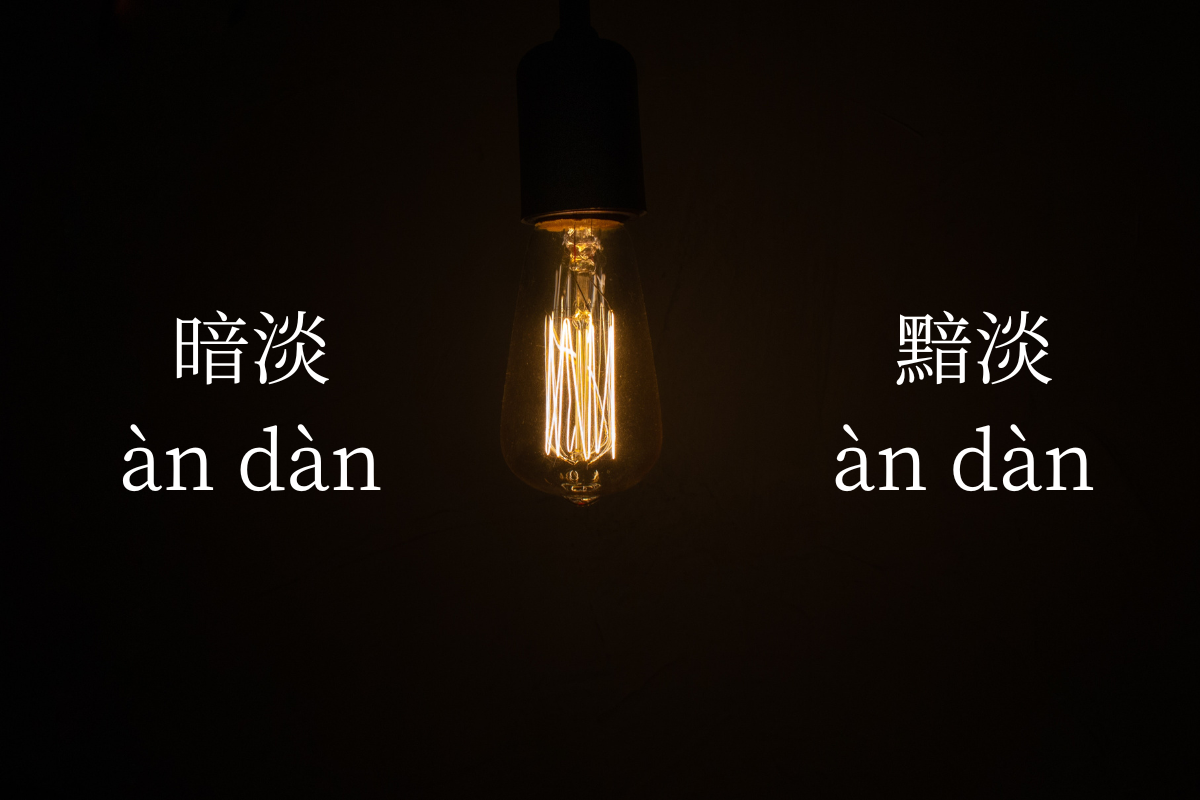
暗淡 (àn dàn) typically implies a lack of brightness or a dim or dark appearance. It can be used to describe things that are not bright or shining, as well as environments that are not well-lit.
Examples:
- The light in the room is dim。
房间里的光线暗淡。
fáng jiān lǐ de guāng xiàn àn dàn。 - The sky gradually dimmed.
天色渐渐暗淡下来。
tiān sè jiàn jiàn àn dàn xià lái。 - The sky was dark and starless that night.
那天晚上的天空暗淡无星。
nà tiān wǎn shàng de tiān kōng àn dàn wú xīng。
黯淡 (àn dàn), on the other hand, implies a gloomy or depressing atmosphere or feeling. It often suggests a sense of hopelessness or melancholy.
Examples:
- He is feeling gloomy.
他的心情黯淡。
tā de xīn qíng àn dàn 。 - There is a gloomy look in her eyes.
她的眼神黯淡无光。
tā de yǎn shén àn dàn wú guāng 。 - The future seems bleak.
前途似乎黯淡无光。
qián tú sì hū àn dàn wú guāng 。
In summary, 暗淡 (àn dàn) and 黯淡 (àn dàn) are two distinct words in Chinese. 暗淡(àn dàn) implies a lack of brightness or a dim or dark appearance, while 黯淡(àn dàn) suggests a gloomy or depressing atmosphere or feeling. Understanding the specific meanings of these words and their appropriate usage can enhance your Chinese language comprehension and communication skills.
Quiz: Please consider whether to use 暗淡 (àn dàn) VS 黯淡 (àn dàn) in the following sentences.
- 黄昏的光线逐渐______下来。
huáng hūn de guāng xiàn zhú jiàn ______ xià lái。 - 他的情绪突然______下来。
tā de qíng xù tū rán ______ xià lái 。 - 乌云使天色变得朦胧______。
wū yún shǐ tiān sè biàn de méng lóng ______。
Answers:
- 暗淡(àn dàn)
- 黯淡(àn dàn)
- 暗淡(àn dàn)