
Chinese characters are ancient animal encyclopedias - '羊' (yáng) enters with twisted horns, '猪' (zhū) proudly displays its round belly, and '犬' (quǎn) stands guard with pointed ears. These three pictorial characters hold the earliest memories of Chinese domestication of animals.
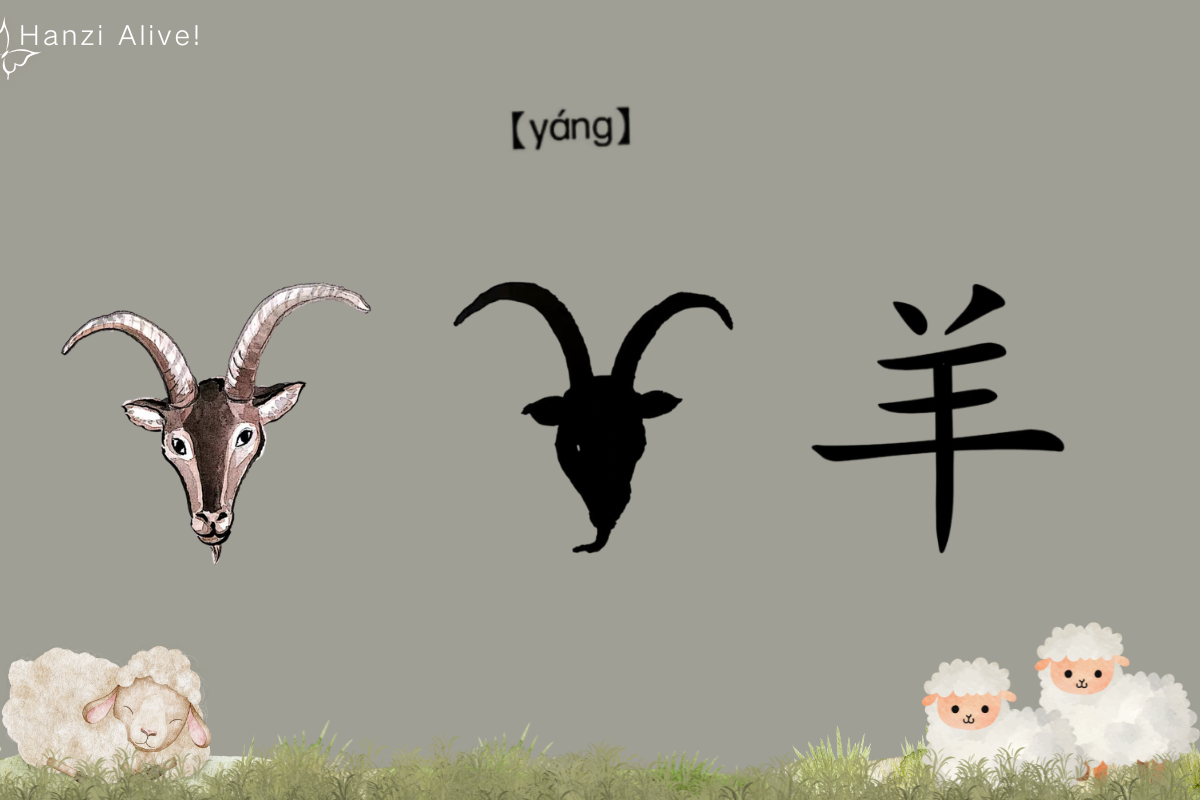
羊(yáng)
Explanation
- Let's examine the character "羊." It signifies a "sheep" or "ram," with a pictograph resembling a ram's head, don't you think?
Example
- The sheep is eating grass.
羊在吃草。
yáng zài chī cǎo. - Sheep wool is very warm.
羊毛很暖和。
yáng máo hěn nuǎn huo.
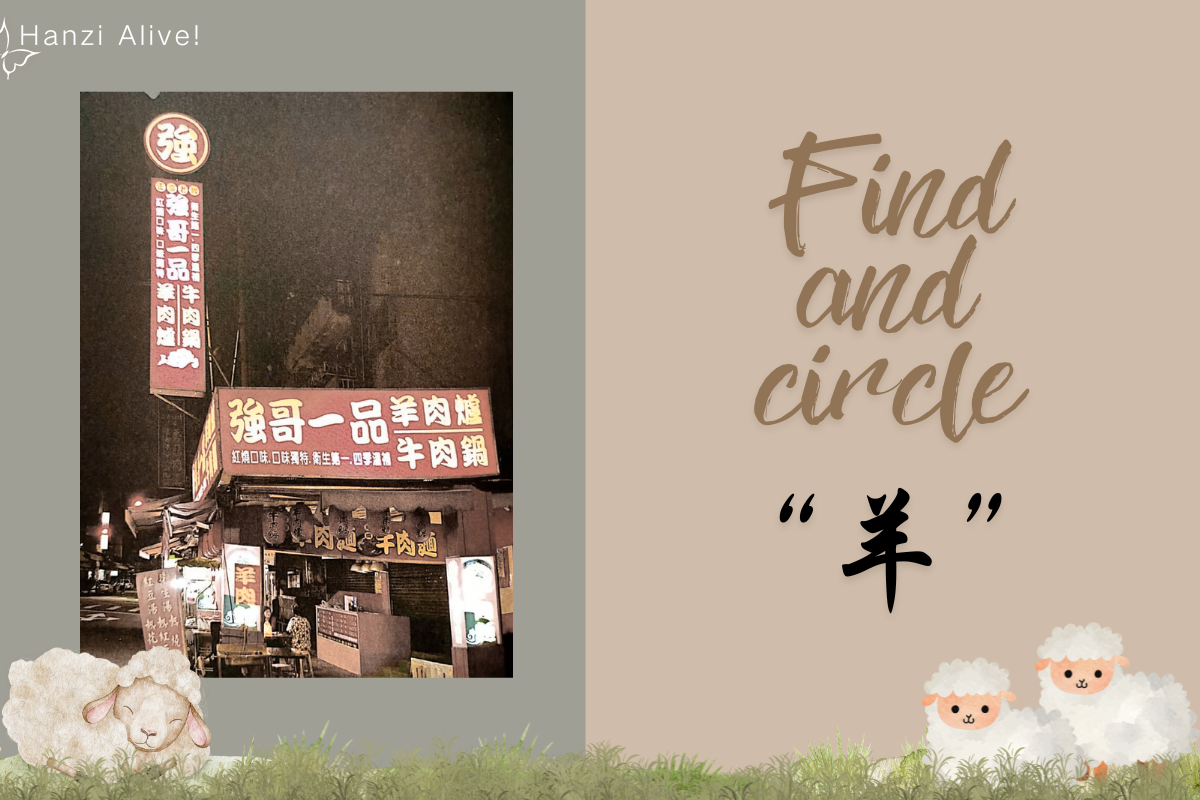
Find and circle "羊" in the image
猪(zhū)
Explanation
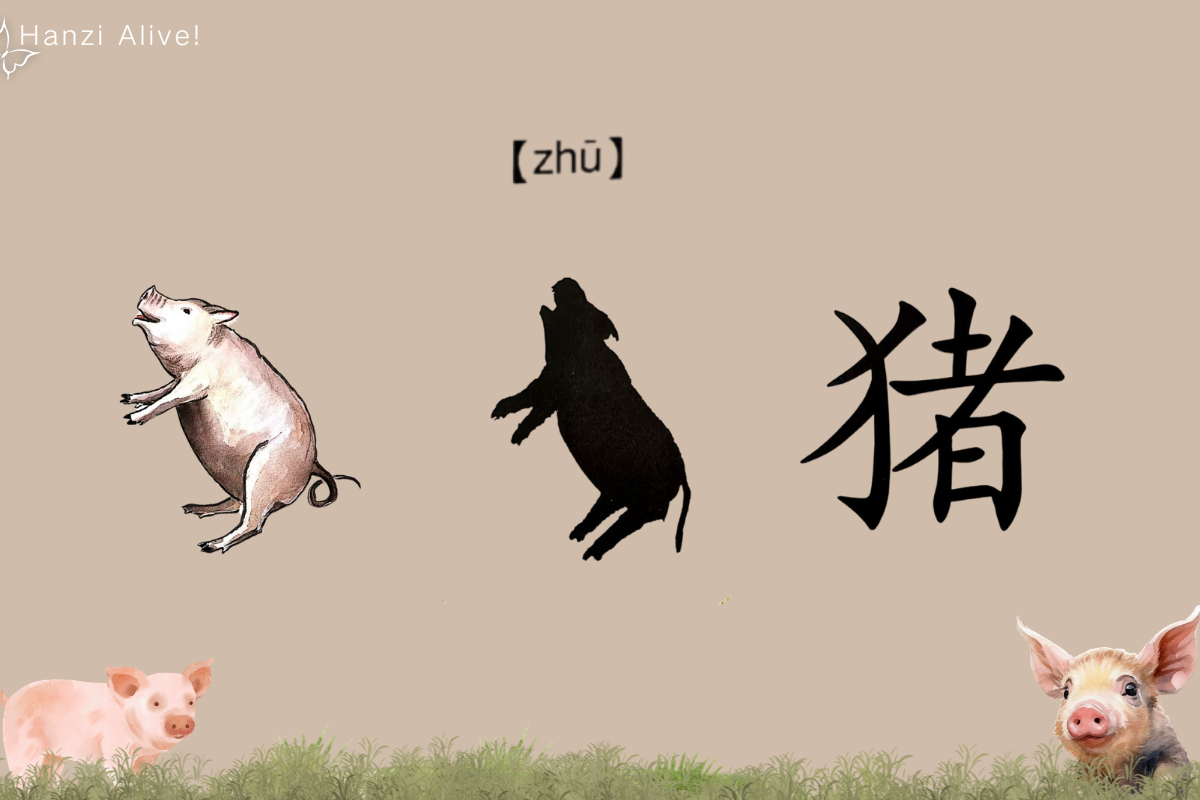
- This is "猪" (pig), representing the animal. Originally, this character did not have "者" on the right. The initial pictograph, "豕," portrays a pot-bellied, short-legged pig with a thin tail, long snout, and large ears.
Example
- The pig is sleeping.
猪在睡觉。
zhū zài shuì jiào. - We eat pork for dinner.
我们晚餐吃猪肉。
wǒ men wǎn cān chī zhū ròu.
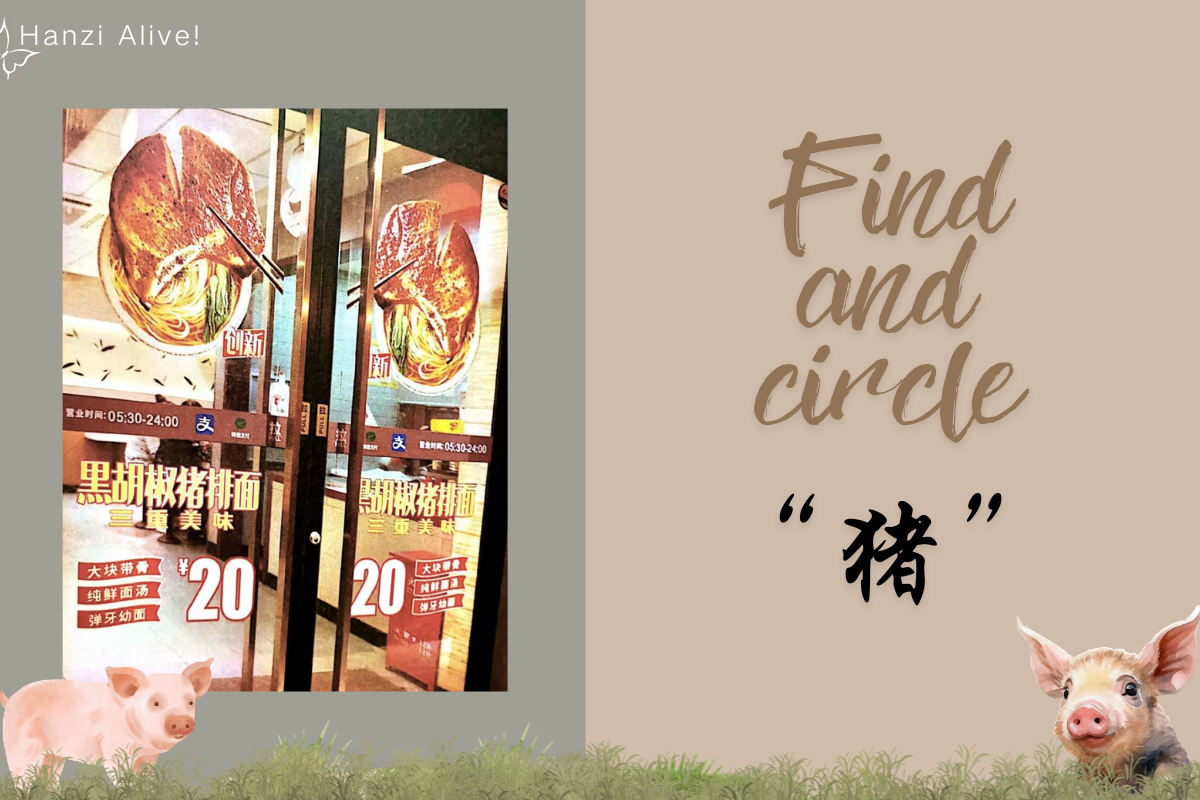
Find and circle "猪" in the image
犬(quǎn)
Explanation
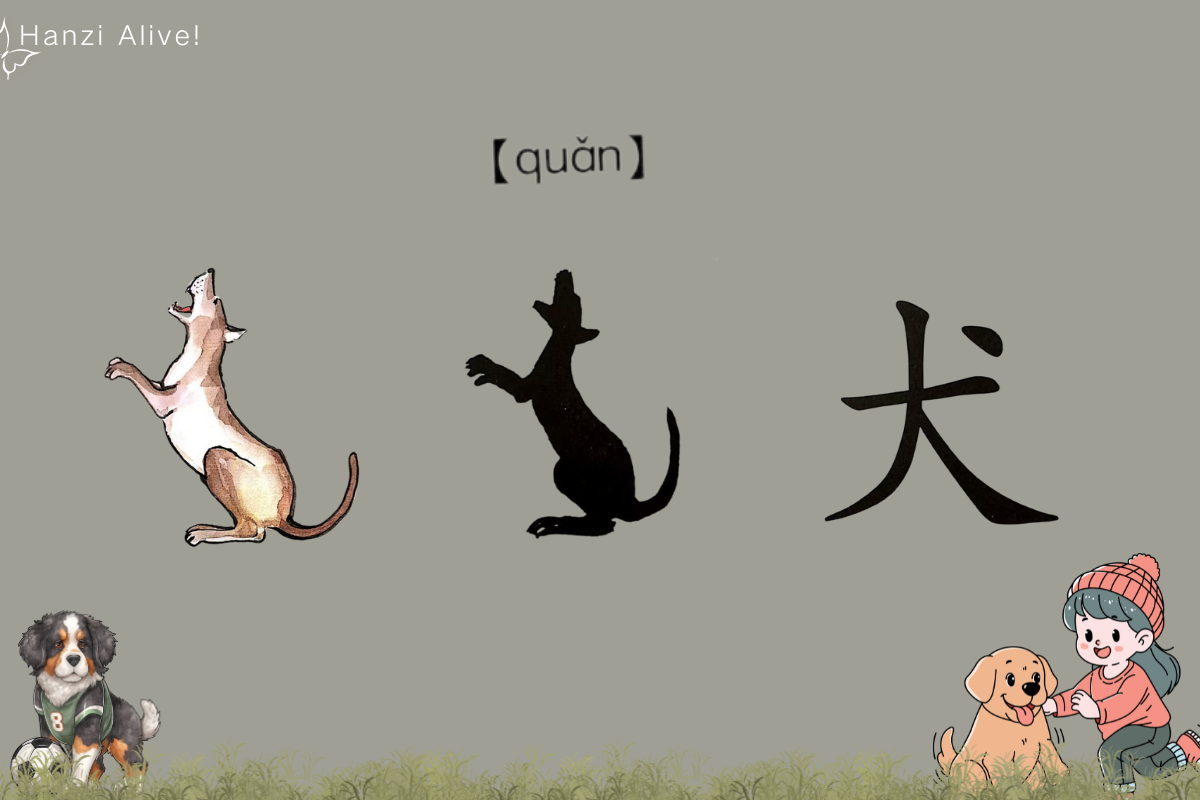
- The original character for "犬" (dog) resembles a dog, similar to "", but with a larger mouth, longer tail, and pointed ears. Chinese likely domesticated dogs early, leading to many characters incorporating "犬."
Example
- Police dogs help catch criminals.
警犬帮助抓罪犯。
jǐng quǎn bāng zhù zhuā zuì fàn. - My family has a pet dog.
我家养了一只犬。
wǒ jiā yǎng le yì zhī quǎn.
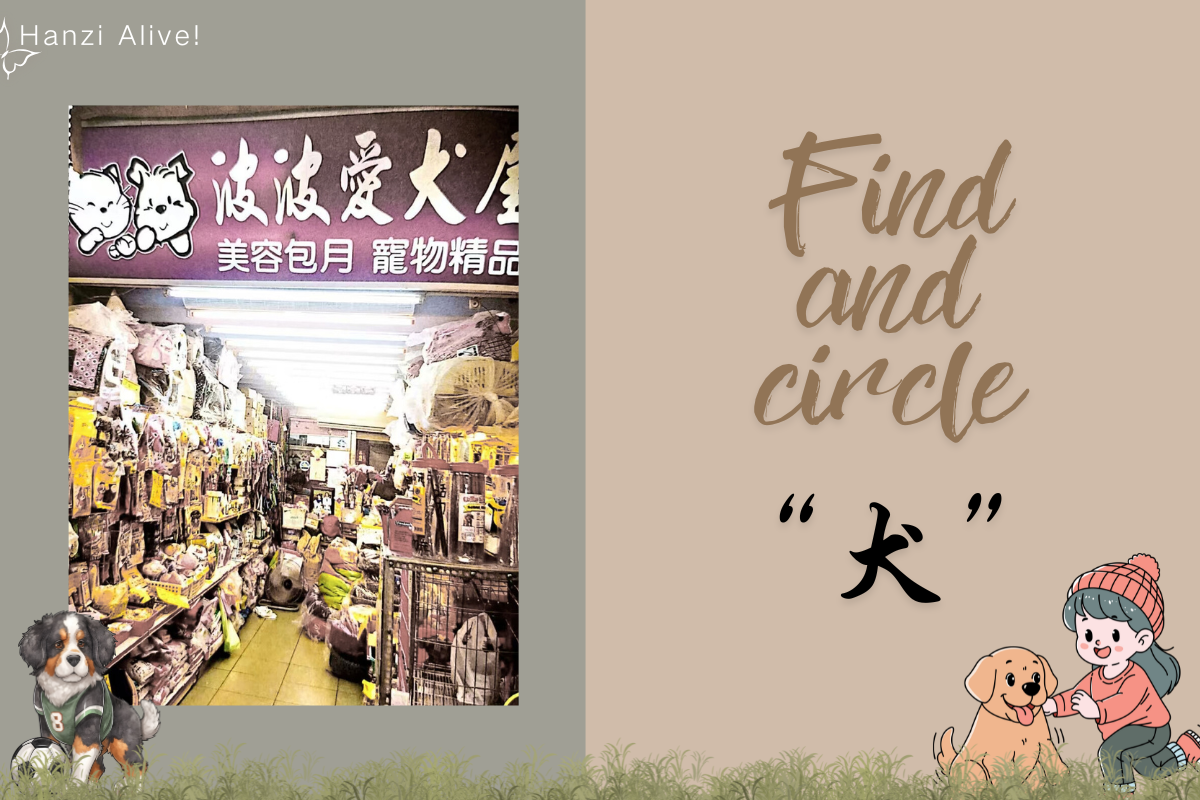
Find and circle "犬" in the image
Now you have decoded these animal symbols: the graceful curves of the ram's horns, the hearty roundness of the pig's belly, and the vigilant lines of the dog's ears - when they transform into Chinese characters, it's like imprinting the pottery patterns of the Neolithic era onto modern paper.