
In ancient China, there lived a wise and legendary figure known as Jiang Taigong (姜太公 Jiāng Tàigōng). Apart from his reputation as a great military strategist and advisor to the Zhou dynasty, he was also famous for an intriguing story about fishing. This tale, rooted in history and steeped in metaphorical significance, offers valuable life lessons that continue to resonate even in today's fast-paced world.
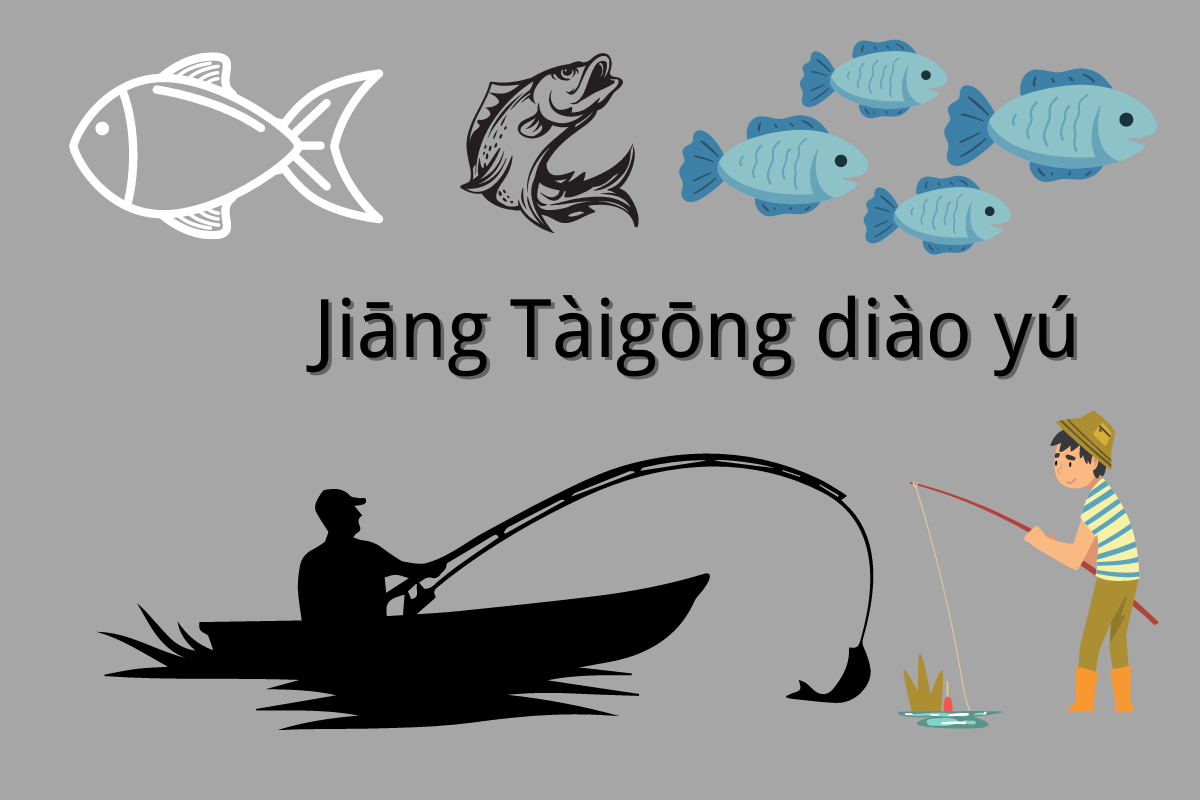
The Story:
Legend has it that Jiang Taigong was searching for a suitable lord to serve. He believed that a virtuous and capable ruler would emerge if he could find one through an unusual method. Jiang chose to cast his fishing line into the Wei River (渭河 Wèi Hé) with a simple requirement: the ruler-to-be would be the one who could resist taking the bait and demonstrate the patience to wait for the right moment.For days and nights, Jiang Taigong patiently fished on the banks of the Wei River, enduring harsh weather and hunger. Many onlookers laughed and doubted his method, deeming it ridiculous. However, Jiang remained steadfast, unwavering in his belief that the one who possessed the virtue of patience would eventually appear.
The Significance:
The story of Jiang Taigong's fishing expedition carries profound lessons. On the surface, it speaks to the virtue of patience and the rewards it can bring. In a world characterized by instant gratification, this tale reminds us that valuable outcomes often require time, dedication, and perseverance.
Moreover, the story highlights the importance of selecting leaders with qualities beyond the superficial. Just as Jiang Taigong sought a ruler who could resist impulsive decisions, we should also look for leaders who possess wisdom, patience, and a long-term perspective.
姜 (Jiāng)
Pronunciation: Pronounce "j" similar to the "j" sound in English "juice."
Tone: 1st tone, which is a steady rising tone, similar to the intonation of a question in English.- 太 (Tài)
Pronunciation: Pronounce "t" clearly, with your tongue gently touching the roof of your mouth.
Tone: 4th tone, which is a relatively low falling tone, akin to the pause or hesitation in English speech. - 公 (Gōng)
Pronunciation: Pronounce "g" similar to the "g" sound in English "go."
Tone: 1st tone, with a steady rising intonation. - 钓 (Diào)
Pronunciation: Pronounce "d" clearly, with your tongue gently touching the roof of your mouth.
Tone: 4th tone, a relatively low falling tone. - 鱼 (Yú)
Pronunciation: Pronounce "y" similar to the "y" sound in English.
Tone: 2nd tone, which starts with a rising intonation and then falls.
- Jiang Taigong went fishing by the river.
姜太公在河边钓鱼。
Jiāng Tàigōng zài hé biān diào yú. - The story of Jiang Taigong's fishing is well-known in Chinese culture.
姜太公钓鱼的故事在中国文化中很有名。
Jiāng Tàigōng diào yú de gùshì zài Zhōngguó wénhuà zhōng hěn yǒumíng. - Jiang Taigong's fishing test symbolizes patience and wisdom.
姜太公的钓鱼考验象征着耐心和智慧。
Jiāng Tàigōng de diào yú kǎoyàn xiàngzhēngzhe nàixīn hé zhìhuì。