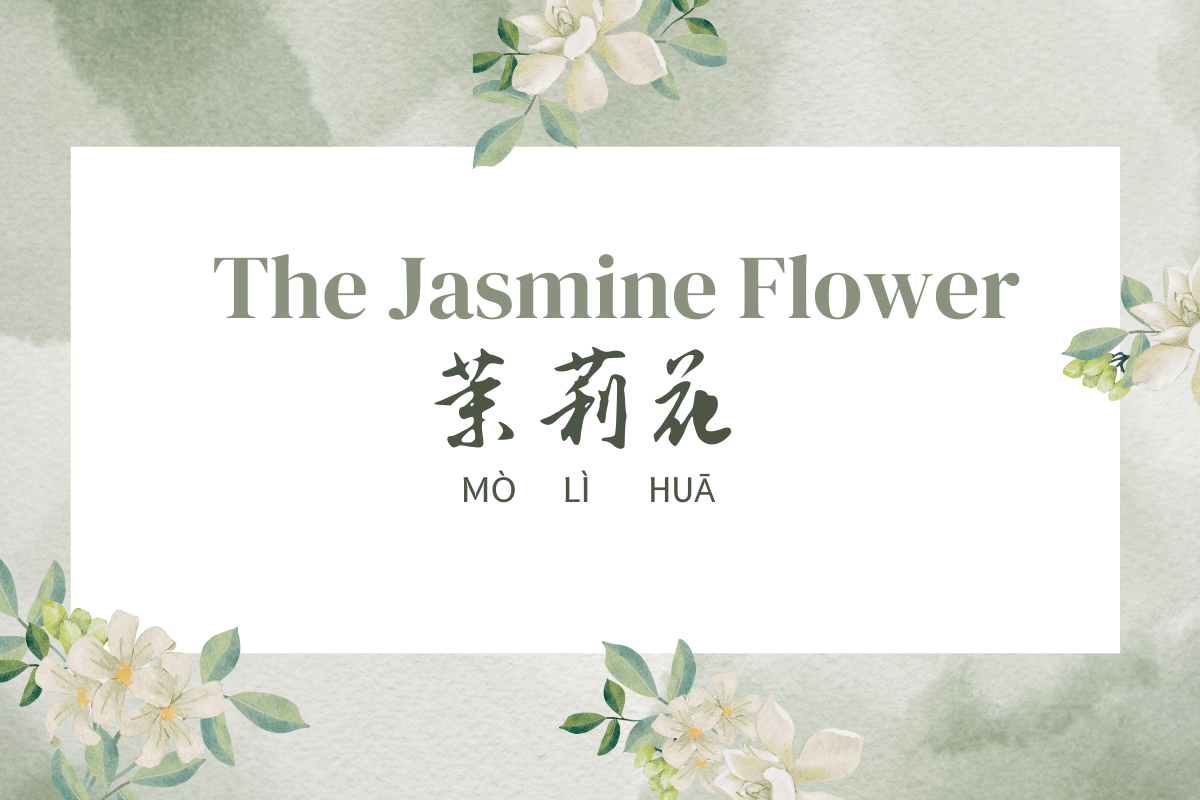
"The Jasmine Flower" is a classic folk song widely cherished in China, with a rich historical and cultural background as well as unique artistic allure.
Origin and Development
The origins of "The Jasmine Flower" can be traced back to the Ming Dynasty. Initially a folk tune popular in the Jiangnan region (such as Jiangsu, Zhejiang, etc.), the lyrics likely reflected local customs, scenery, and daily life. Due to the jasmine flower's common presence, with its fresh fragrance and pristine white petals, it naturally found its way into the song as a vessel for emotional expression.
During the Qing Dynasty, the influence of "The Jasmine Flower" further expanded. It not only circulated widely among the populace but was also included in various musical collections and operatic works.
Since the 20th century, "The Jasmine Flower" has gained international recognition. As a representative of Chinese culture, it frequently appears in global cultural exchanges. For instance, at international music festivals and cultural showcases, Chinese artists often perform "The Jasmine Flower," showcasing the unique charm of Chinese folk music. Its simple yet memorable melody, combined with rich cultural connotations, easily resonates with people of different nations and ethnicities.
Lyrics
好一朵茉莉花 (hǎo yī duǒ mò lì huā)
好一朵茉莉花 (hǎo yī duǒ mò lì huā)
满园花开香也香不过它 (mǎn yuán huā kāi xiāng yě xiāng bù guò tā)
我有心采一朵戴 (wǒ yǒu xīn cǎi yī duǒ dài)
又怕看花的人儿骂 (yòu pà kàn huā de rén ér mà)
好一朵茉莉花 (hǎo yī duǒ mò lì huā)
好一朵茉莉花 (hǎo yī duǒ mò lì huā)
茉莉花开雪也白不过它 (mò lì huā kāi xuě yě bái bù guò tā)
我有心采一朵戴 (wǒ yǒu xīn cǎi yī duǒ dài)
又怕旁人笑话 (yòu pà páng rén xiào huà)
好一朵茉莉花 (hǎo yī duǒ mò lì huā)
好一朵茉莉花 (hǎo yī duǒ mò lì huā)
满园花开比也比不过它 (mǎn yuán huā kāi bǐ yě bǐ bù guò tā)
我有心采一朵戴 (wǒ yǒu xīn cǎi yī duǒ dài)
又怕来年不发芽 (yòu pà lái nián bù fā yá)
lyrics Translation
Oh, what a lovely jasmine flower,
Oh, what a lovely jasmine flower,
In the garden, no blossom is as fragrant as it.
I wish to pluck one to adorn myself,
But fear the disapproval of onlookers.
Oh, what a lovely jasmine flower,
Oh, what a lovely jasmine flower,
In the snow, no white is as pure as it.
I wish to pluck one to wear,
Yet I dread the ridicule of others.
Oh, what a lovely jasmine flower,
Oh, what a lovely jasmine flower,
In the garden, no bloom can surpass it.
I yearn to pick one to wear,
Yet fear it may not sprout next year.
Themes and Connotations
Through describing the jasmine flower's beauty and fragrance, the lyrics highlight its uniqueness by comparing it to the surrounding flowers, snow, etc. Additionally, the inner conflict of the flower picker is portrayed – the desire to adorn oneself with beautiful flowers while worrying about hindering the flower's growth or inviting criticism from others, adding an element of intrigue and emotional depth to the song.
Thematically, "The Jasmine Flower" primarily conveys a love for natural beauty and an appreciation for all things beautiful. Symbolizing purity, elegance, and beauty, the jasmine flower embodies the pursuit of and admiration for good things in life. It also reflects the traditional Chinese concept of "harmony between man and nature," emphasizing the harmonious coexistence between humans and the environment. People not only enjoy natural beauty but also consider natural growth patterns and ecological balance, a concept vividly portrayed in the lyrics.
"The Jasmine Flower" encapsulates the essence of Chinese folk music, showcasing the wisdom and creativity of the Chinese working people. It is a treasure of Chinese folk art known both domestically and internationally as a familiar and iconic song.