Du Fu-the Saint of Poetry

Thursday, January 12, 2023

Du Fu (February 12, 712 ~ 770), with Zi Mei as the name, was a great realist poet of the Tang Dynasty. Together with Li Bai, he was called "Li Du". Born in Gongxian County, Henan Province, he comes from Xiangyang, Hubei Province. In order to distinguish from the other two poets Li Shangyin and Du Mu, namely "Xiao Li Du", Du Fu and Li Bai are also called "Da Li Du", and Du Fu is often called "Lao Du".
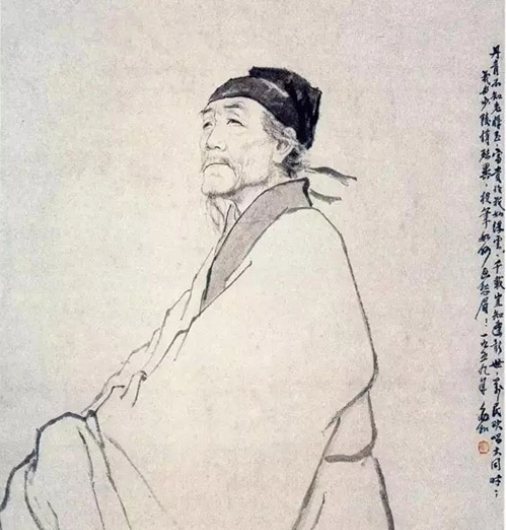
Du Fu

In his youth, Du Fu visited Wuyue and Qizhao successively, during which he went to Luoyang to apply for the examination. After the age of 35, he first took the exam in Chang'an and failed; Later, he offered gifts to the emperor and noble people. Failure in officialdom witnessed the extravagance and social crisis of the upper class of the Tang Dynasty. In the 14th year of Tianbao (755), the rebellion between an and Shi broke out, Tongguan was lost, and Du Fu traveled to many places successively. In the second year of Qianyuan Dynasty (759), Du Fu abandoned his official position and entered Sichuan. Although he avoided the war and lived a relatively stable life, he still cared about ordinary people and state affairs. Du Fu created famous works such as climbing high, spring outlook, Northern Expedition, three officials and three departures. Although Du Fu is a realistic poet, he also has a wild and uninhibited side. It is not difficult to see Du Fu's heroic spirit from his famous work the song of the Eight Immortals in drinking.

The core of Du Fu's thought is the thought of benevolent government. He has the grand ambition of "to the king Yao and Shun, and then make the customs pure". Although Du Fu was not famous in his lifetime, he became famous and had a far-reaching impact on Chinese literature and Japanese literature. A total of about 1500 poems of Du Fu have been preserved, most of which are collected in the collection of Du Gongbu.

In the winter of the fifth year of Dali (770), he died of illness at the age of 59. Du Fu's influence in Chinese classical poetry is very far-reaching. He is called "the saint of poetry" by later generations, and his poetry is called "the history of poetry". Later generations called him Du Shiyi, Du Ministry of industry, Du Shaoling and Du thatched cottage.

Sign up for a free trial now!

FAQ / Tips

Our students come from a wide range of ages, from 3 years old to over 80 years old. Our courses are tailored to each student's age and proficiency level to ensure they can receive maximum benefit and progress. Whether you want to learn Chinese as a second language or improve your existing Chinese skills, we can provide you with courses and resources that are suitable for you
If you have any questions or concerns, you can send an email to: service @chineselearning.com.We have a team of professionals who will be happy to assist you with any issues as soon as possible.
We offer highly flexible class schedules that cater to your needs, with lessons available from 7am to 10pm Beijing time, seven days a week.This allows you to conveniently take lessons at any time and from any location that suits your schedule.
Before starting any Chinese language course, the teacher will assess your Chinese language proficiency level through a placement test.This helps to determine your current level of understanding and ability in Chinese, and allows the teacher to tailor the course materials and teaching methods to your specific needs and goals. The placement test may include assessments of your reading, writing, listening, and speaking skills.Based on the results of the test, the teacher will be able to recommend an appropriate course of study for you.
Our instructors are highly skilled and experienced experts in Chinese language teaching, with proficiency in multiple languages. They hold at least a bachelor's degree in teaching Chinese as a foreign language, and possess extensive teaching experience and knowledge. Through a rigorous selection process and ongoing training, our instructors are equipped to provide students with authentic pronunciation, accurate language usage, and cultural background knowledge, all of which are essential for achieving mastery of the Chinese language.
No, the tuition fees you have paid cover all costs.There are no additional fees or hidden charges. We strive to be transparent and upfront with our pricing, ensuring that our clients receive the best value for their investment.