
Autumn, a season filled with poetry and mystery. When the golden leaves flutter down like butterflies, when the cool autumn breeze gently kisses your face, have you ever felt a touch of magical enchantment, or pondered upon the mysterious and fascinating mythological stories about autumn? This article will share with you the mythological tales surrounding autumn in Chinese culture!

The Autumn Deity Shaohao
Shaohao, the autumn deity, is one of the Five Emperors in ancient Chinese mythology, revered as the God of the West and the God of Autumn.
It is said that Shaohao established a marvelous kingdom where birds held unique governing roles. Various birds were assigned different tasks: some delivered messages, some guarded the borders, and some brought auspicious signs.
Every autumn, this poetic season, Shaohao would lead a colorful flock of birds gracefully soaring through the sky. As their wings flapped, they brought forth a pleasant and refreshing autumn breeze, as if nature had sent a gift of freshness. Simultaneously, they painted the earth with a vibrant autumn palette—red maple leaves, golden gingko leaves, orange persimmons intertwining to create a magnificent and colorful tapestry.
As the guardian of autumn, Shaohao meticulously managed all aspects of the autumn season. He wielded his magical powers to nurture the maturity of crops in the fields, where ripe ears of wheat bowed down, and golden rice swayed, seemingly narrating the story of abundance to all.
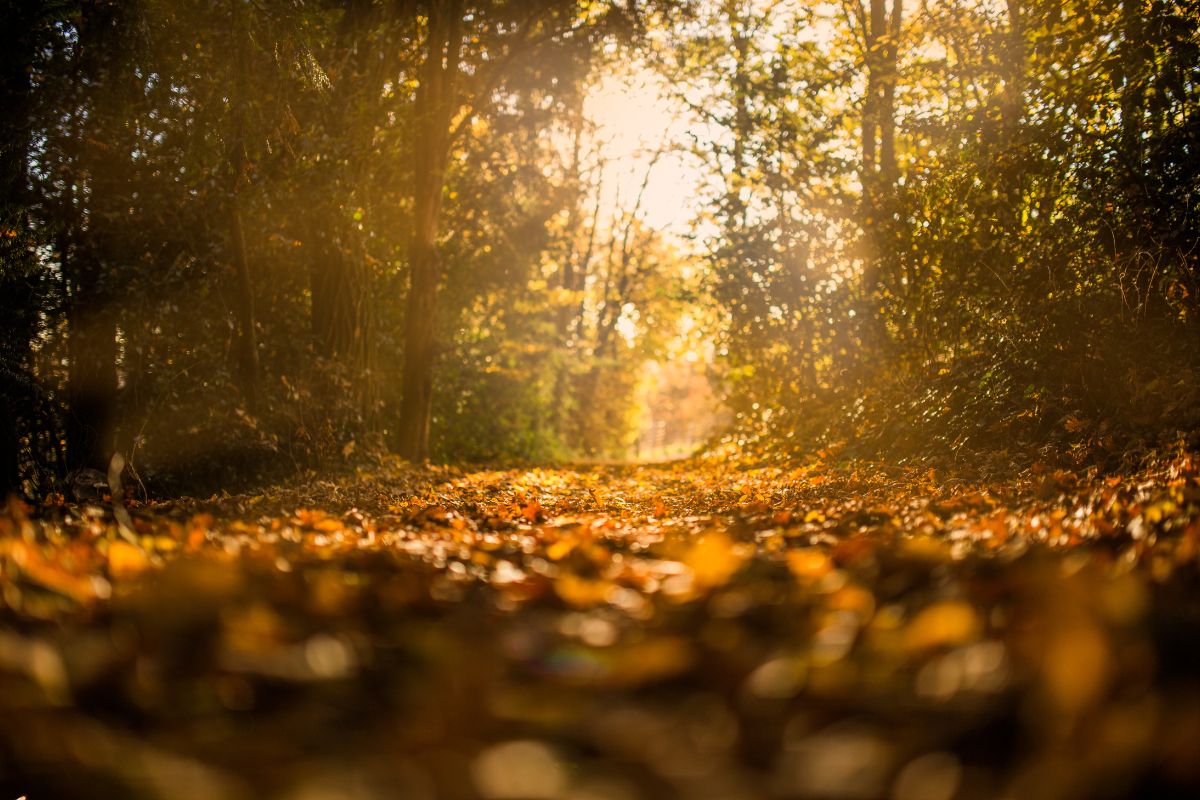
Under his enchantments, the leaves subtly changed color and drifted down, some fiery red like flames, some brilliant yellow like gold, some amber orange like amber, twirling from the branches to create a colorful carpet upon the earth.

The essence of abundance and tranquility brought by Shaohao allowed people to feel the grace of nature's blessings祝福(zhù fú) and the cycles of life during this season.
祝福 (zhù fú), noun, blessings
Examples:
- 他收到了许多祝福。
He received many blessings.
tā shōu dào le xǔ duō zhù fú 。 - 这些祝福让她感到温暖。
These blessings made her feel warm.
zhè xiē zhù fú ràng tā gǎn dào wēn nuǎn 。
The Ancestor of Agriculture and the Gifts of Autumn
In a time long past, people on the earth lived a life of hunting and gathering, often struggling to find sustenance and security.
It was during this time that a man named Houji was born. Houji had a special connection with the land and plants from a young age. He often played alone in the fields, observing the growth of various grasses and trees. As he grew older, his curiosity intensified. He began pondering why some plants could bear delicious fruits while others could not. Why some plants thrived in one location while struggling to survive in another?
Thus, Houji embarked on an exploratory journey. He traversed mountains and rivers, studying the soil, climate, and vegetation in different regions. Along this journey, he discovered seeds of various grains, seemingly small but holding tremendous potential.
Houji carefully brought these seeds home and began experimenting with cultivation. He selected the land meticulously, tilled the soil, sowed the seeds, and patiently waited. Day by day, those tiny seeds miraculously sprouted. Houji was ecstatic; he tended to these seedlings with even greater care, watering, weeding, fertilizing—never slacking in his efforts.
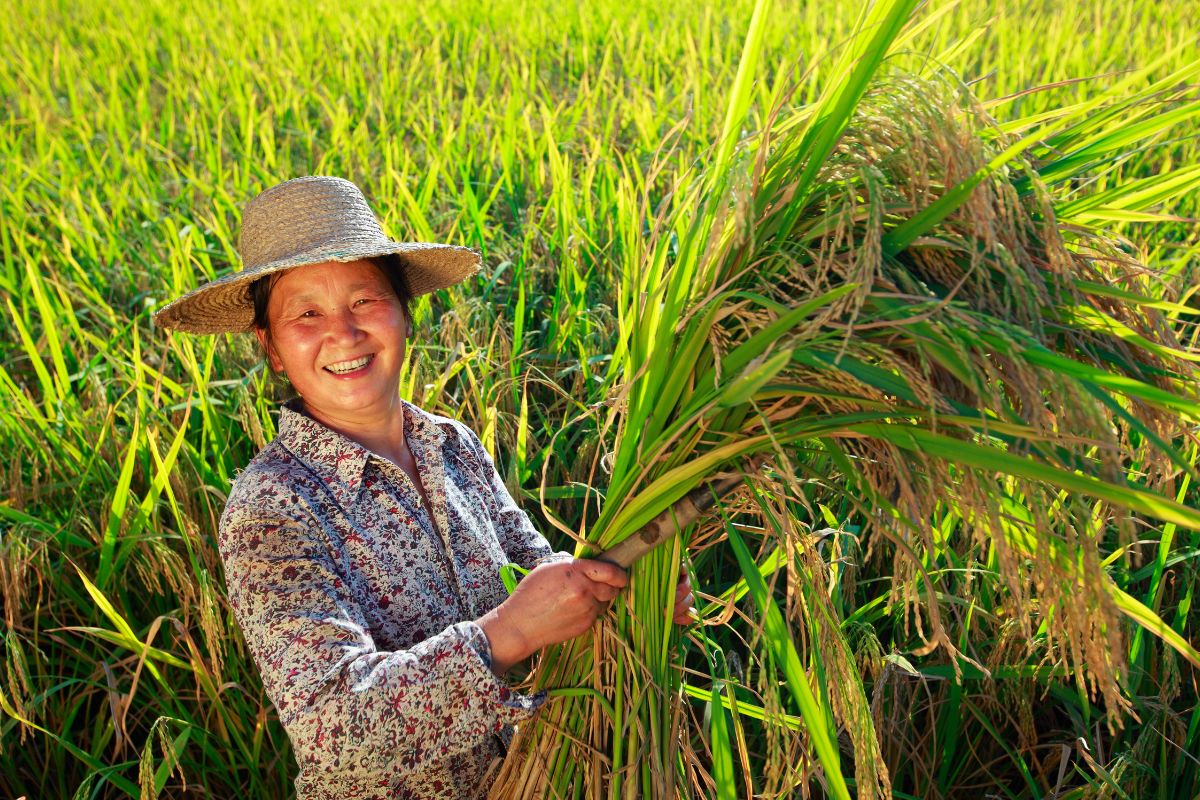
Finally, autumn arrived, painting the fields a golden hue. Those once small seeds had grown into bountiful grains谷物(gǔ wù), heavy ears of wheat swaying in the wind, as if paying homage to Houji. Overwhelmed with joy, tears streaming down his face, Houji knew he had found the solution to alleviate hunger.
谷物 (gǔ wù), noun, grains
Examples:
- 今年的谷物丰收了。
This year's grains have a bumper harvest.
jīn nián de gǔ wù fēng shōu le 。 - 这些谷物需要储存起来。
These grains need to be stored.
zhè xiē gǔ wù xū yào chǔ cún qǐ lái 。
Houji generously shared his agricultural techniques with those around him, and people began emulating him, starting to grow grains. The land became lush with vibrant farmland; people no longer fretted over food.
Houji's name spread far and wide, revered as the Ancestor of Agriculture. His story inspired generations of people, teaching them the power of diligence and wisdom, fostering a deep sense of respect and gratitude for the land.
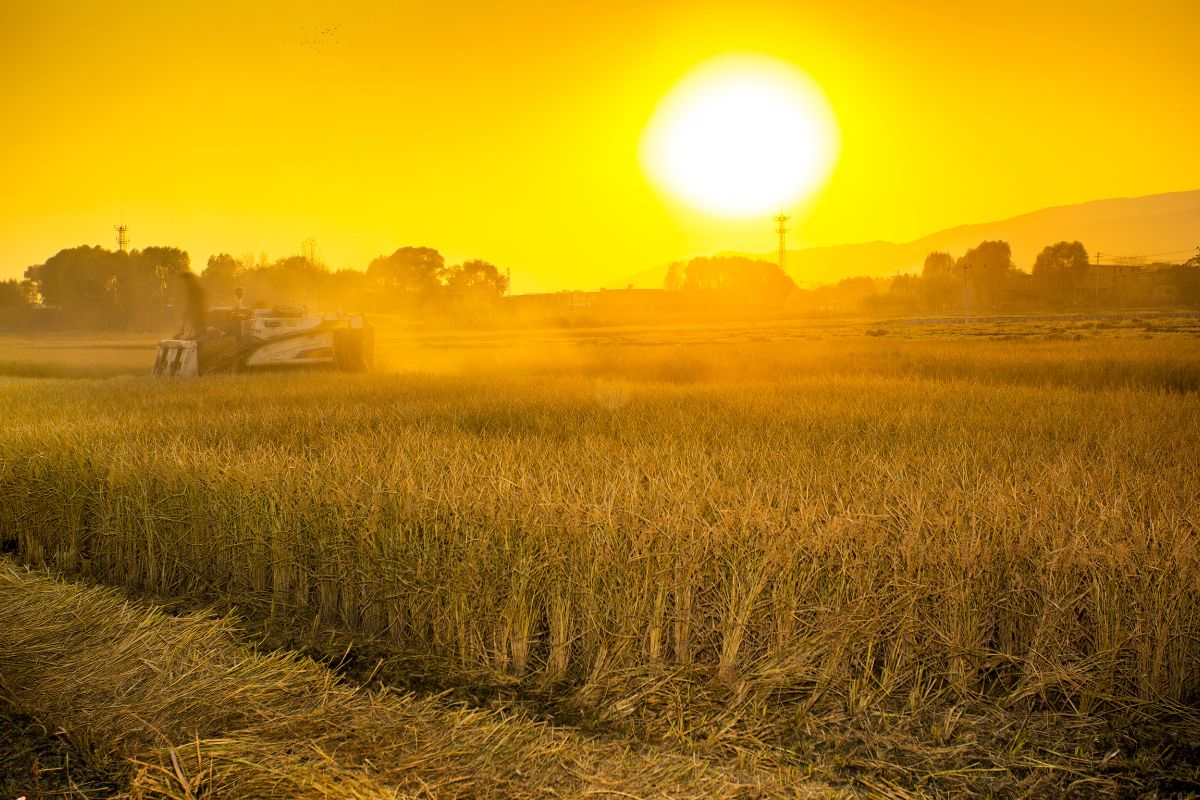
Every autumn, as people behold the bountiful fields, they remember Houji and the hope and prosperity he brought to humanity.
Autumn is not just a masterpiece of nature but a precious gift bestowed by these ancient myths of deities and heroes alike. Let us, in each autumn season, approach nature with reverence and gratitude, cherish the precious blessings it bestows upon us.