
Ancient China's technological brilliance is renowned worldwide, thanks to its Four Great Inventions. These monumental inventions have not only transformed people's lifestyles but also propelled the development of science and technology. In this blog post, we will delve into China's Four Great Inventions, exploring their significance throughout history and in the present day.
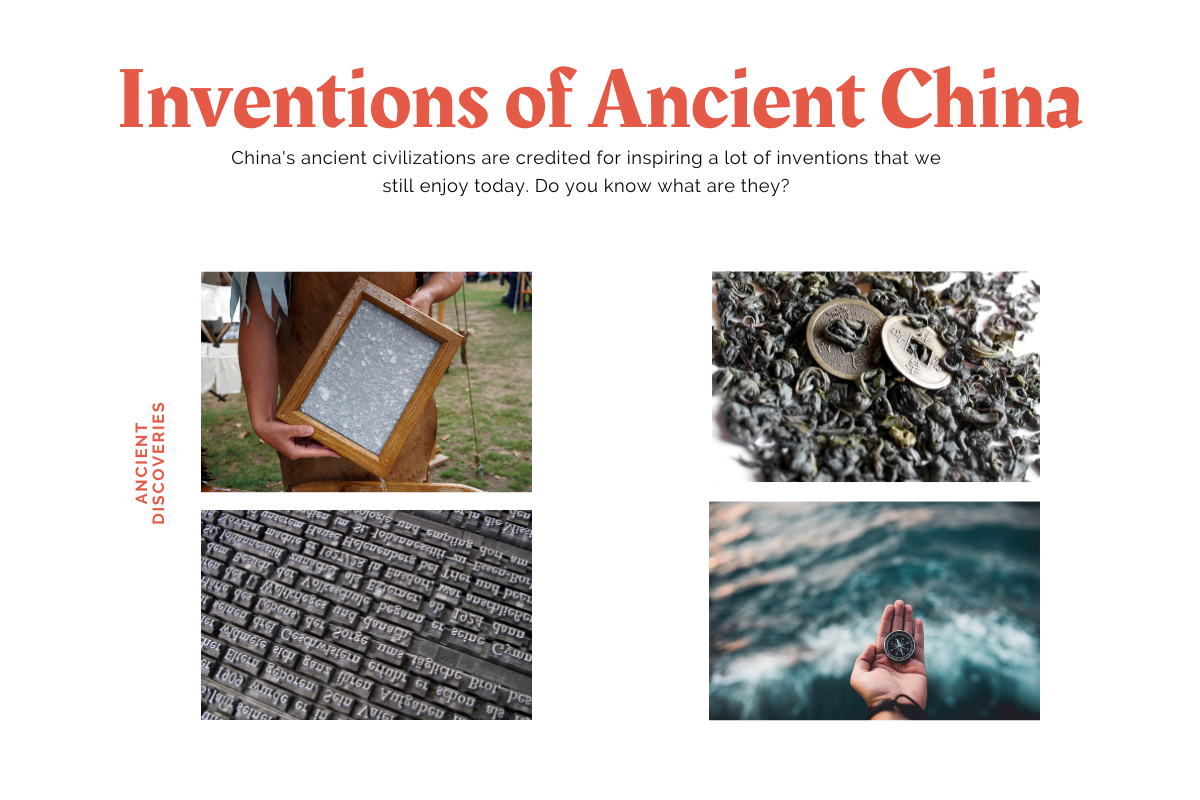
Papermaking 造纸术 (zào zhǐ shù): Revolutionizing Writing
Papermaking is an outstanding invention of ancient China, dating back to around 105 B.C. Innovator Cai Lun transformed materials like plant fibers, fishing nets, and old cloth into paper, providing a cost-effective and mass-produceable medium for writing. The advent of papermaking not only facilitated the dissemination of literature, science, and culture but also laid the foundation for later developments such as printing and cultural advancements.

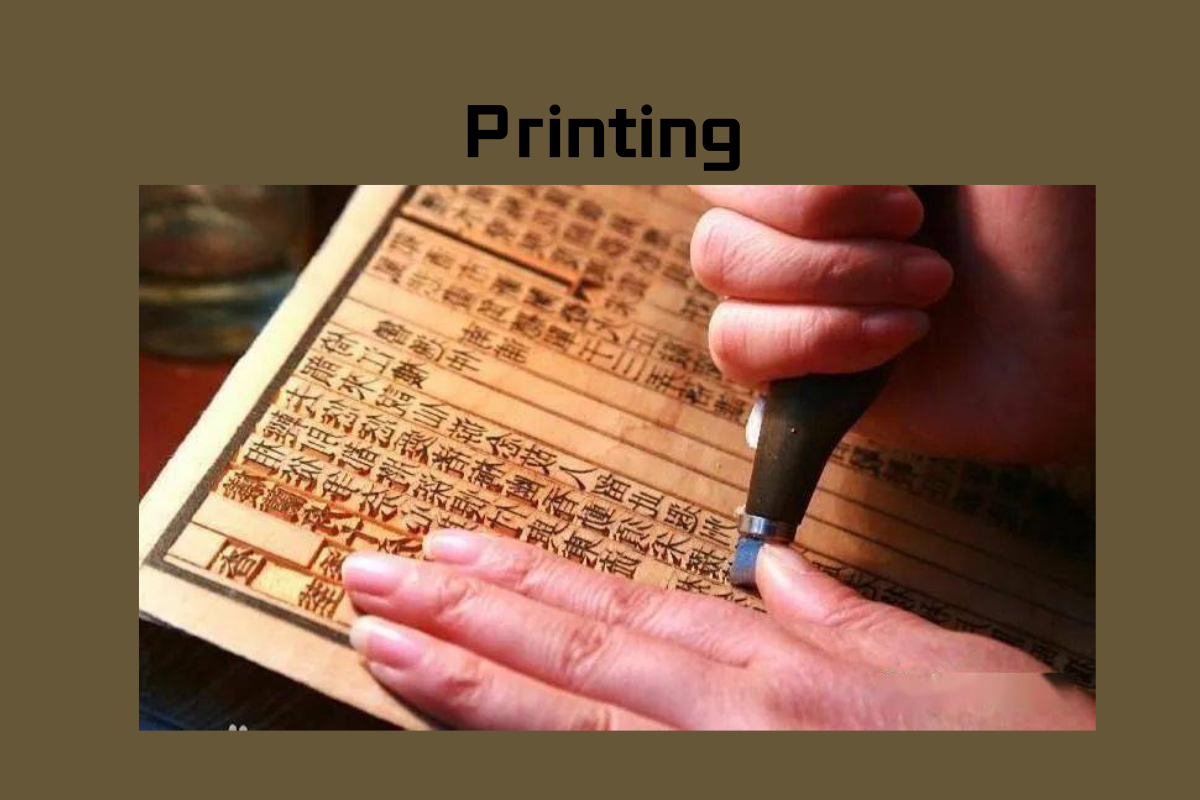
Printing 印刷 (yìn shuā): Artisan of Text Replication
The invention of printing is often credited to Zhao Ji, active during the Northern Song Dynasty in the 9th century. He creatively employed movable type printing technology, allowing books to be reproduced more rapidly and accurately. This technology significantly reduced the time and labor costs of writing, facilitating the widespread dissemination of knowledge. Large projects like the completion of the "Great Yuan Unified Records" and the "Yongle Encyclopedia" relied on the progress of printing.
Compass 指南针 (zhǐ nán zhēn): Guiding Light for Maritime Exploration
The compass, initially used for indicating direction, can be traced back to the 11th century in the Southern Song Dynasty. Its appearance allowed navigators to swiftly and accurately determine direction at sea, fostering the development of maritime trade and exploration. The compass played a crucial role in promoting geographical discoveries, cultural exchanges, and trade connections, contributing significantly to the understanding of world geography.

Gunpowder 火药 (huǒ yào): Spark of Military Revolution
Gunpowder, originating from China, dates back to the 9th century. Its military applications, from simple fireworks to firearms, cannons, and later rockets, revolutionized the landscape of warfare. The dissemination of gunpowder not only influenced military tactics but also had a substantial impact on the global military and political landscape.

The Four Great Inventions hold unique and profound meaning for the Chinese, shaping various aspects of Chinese history and culture.
Here's a brief exploration of the special significance of these inventions in the hearts of the Chinese:
Cultural Heritage and Pride (Wénhuà Chuánchéng Yǔ Zìháo Gǎn):
The Four Great Inventions symbolize outstanding achievements in ancient Chinese culture, serving as a source of pride for the Chinese people. These inventions not only showcase China's leading position in ancient technological fields but also strengthen the pride and identity of the Chinese in their cultural heritage.
Technological Innovation and Wisdom Tradition (Kējì Chuàngxīn Yǔ Zhìhuì Chuántǒng):
These inventions reflect China's remarkable contributions to technological innovation in ancient times. Through papermaking, printing, the compass, and gunpowder, the Chinese demonstrated a profound understanding of practical technology, providing future generations with powerful insights into innovation and a tradition of wisdom.
- The invention of papermaking revolutionized how we write.
造纸术的发明彻底改变了我们的书写方式。
Zào Zhǐ Shù de fāmíng chèdǐ gǎibiàn le wǒmen de shūxiě fāngshì. - Have you heard about the compass?
你听说过指南针吗?
Nǐ tīngshuō guò zhǐnánzhēn ma? - Yes, it helps sailors find their way at sea.
听说过,它帮助船员在海上找到方向。
Tīngshuō guò, tā bāngzhù chuányuán zài hǎishàng zhǎodào fāngxiàng.