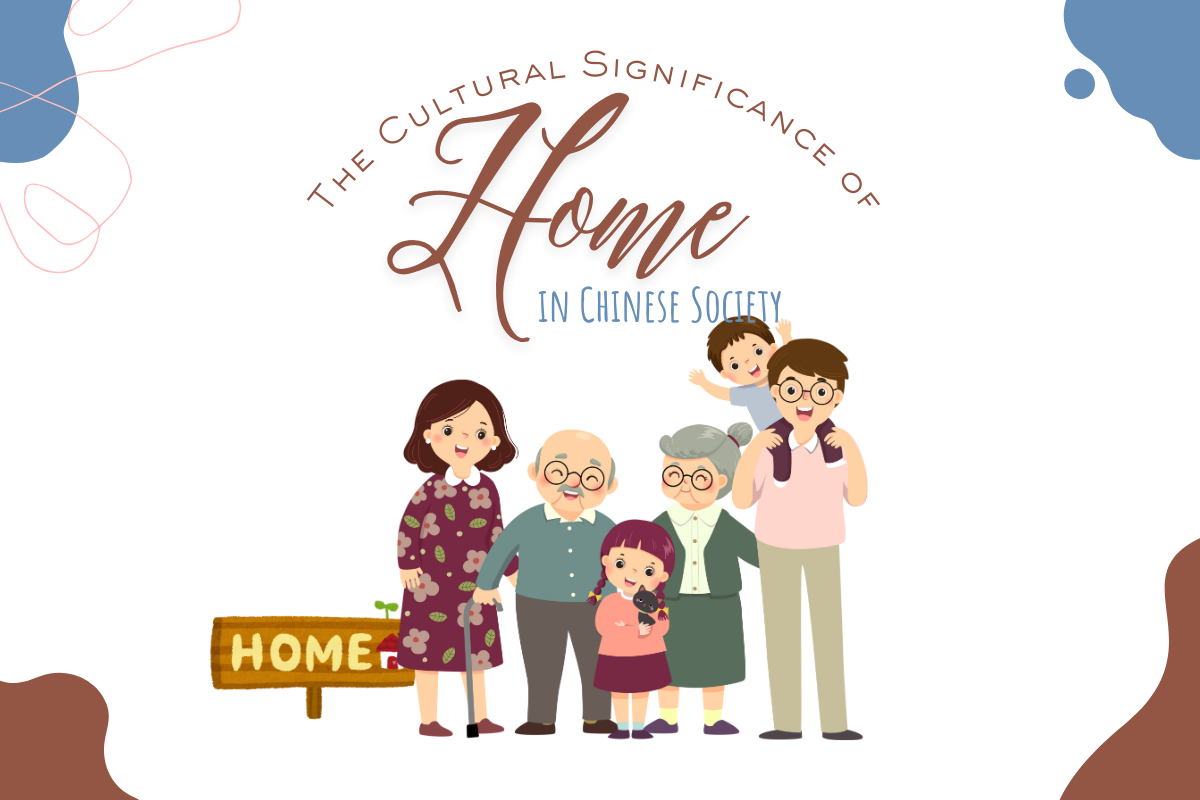
To Chinese people, "home" is far more than just a physical living space. It encompasses emotions, ethics, responsibilities, and culture, embodying a complex concept rooted in blood and marital ties. At its core, "home" is built upon deep familial bonds and the central Confucian value of filial piety, emphasizing collective identity, internal harmony, and a cohesive social and cultural community with strong continuity.
Core Definition and Explanation of Home
In Chinese, "家 (jiā)" extends beyond the physical "House," representing an emotional and ethical community built on blood and marital ties. It centers around profound familial connections and Confucian values of filial piety, highlighting mutual responsibilities, sacrifices, and devotion among members.
On a cultural level, "home" serves as the cornerstone of the Chinese spiritual world, reflecting a strong collectivist orientation. Individual honor and shame are shared with the family, prioritizing family stability and harmony over personal interests. This mindset extends to society, shaping concepts like "nation" and "hometown," making "home" crucial for understanding Chinese social relationships and cultural logic.
Common Phenomena and Reflections
Spring Festival Travel Rush (Chunyun, The Spring Migration)
The largest annual human migration globally. Regardless of location or busy schedules, people strive to return home before the Lunar New Year's Eve to share a reunion dinner with family. This powerfully demonstrates the strong bonding force of "home" as an emotional anchor.
Marriage Views on "Matching Families"
Marriage is not just a union of two individuals, but a blending of two families. Factors like family background, economic status, and education level (the concept of "matching families") remain significant considerations for many households.
Family Education and Investment
Chinese families invest significantly in their children's education, often sparing no expense. The belief in "striving for education even if poor" is deeply ingrained. Parents often pin their life hopes on their children, viewing academic success as the best reward for the family.
Foundation of a "Relationship" Society
The "home" culture extends outward, forming the foundation of China's "relationship society." Loyalty to the family expands to trust and care for relatives, friends, and fellow villagers, creating a complex and practical social network.
The "Leaning on Parents" Phenomenon and Modern Conflicts
On one hand, families serve as substantial support, with parents going to great lengths to assist children with buying homes, cars, or childcare (partially leading to the "leaning on parents" trend). On the other hand, this conflicts with modern ideals of independence sought by younger generations, sparking intergenerational conflicts.

Expressions Related to "Home"
The Chinese character "家 (jiā)“ serves as a radical, spawning numerous vocabulary.
Key Vocabulary:
- 家庭 (jiā tíng): Family. A more formal term.
Example:
I come from a happy family.
我来自一个幸福的家庭。
wǒ lái zì yī gè xìng fú de jiā tíng.
- 家人 (jiā rén): Family members.
Example:
These are my family members.
这是我的家人。
zhè shì wǒ de jiā rén.
- 家乡 (jiā xiāng): Hometown.
Example:
I miss my hometown a lot.
我很想念我的家乡。
wǒ hěn xiǎng niàn wǒ de jiā xiāng.
- 家伙 (jiā huo): Folks, mate (colloquial, referring to people or objects).
Example:
You are an interesting fellow!
你这个家伙真有意思!
nǐ zhè ge jiā huo zhēn yǒu yì si!
- 家务 (jiā wù): Household chores.
Example:
We need to share household chores.
我们需要分担家务。
wǒ men xū yào fēn dān jiā wù.
Idioms and Phrases:
- 家家有本难念的经 (jiā jiā yǒu běn nán niàn de jīng):Every family has its own difficulties.
- 成家立业 (chéng jiā lì yè): Establish both a family and a career. A traditional symbol of a successful male life.
- 家喻户晓 (jiā yù hù xiǎo): Well-known to all households. A description of widespread fame.
- 无家可归 (wú jiā kě guī): Homeless. Describing an extremely dire situation.
Sentences:
- 欢迎来我家做客。
huān yíng lái wǒ jiā zuò kè.
Welcome to my home.
- 家人是我最坚强的后盾。
jiā rén shì wǒ zuì jiān qiáng de hòu dùn.
Family is my strongest backup.
- 他事业有成,家庭美满。
tā shì yè yǒu chéng, jiā tíng měi mǎn.
He has a successful career and a happy family.
The "home" culture of Chinese people is a complex and intricate system, serving as both a shelter of emotions and a communal responsibility. It shapes the Chinese character and behavioral norms, deeply influencing the structure and operation of Chinese society. Despite changes in traditional family structures and personal beliefs due to modernization and globalization, the status of "home" as the core of the Chinese spirit remains stable and robust.