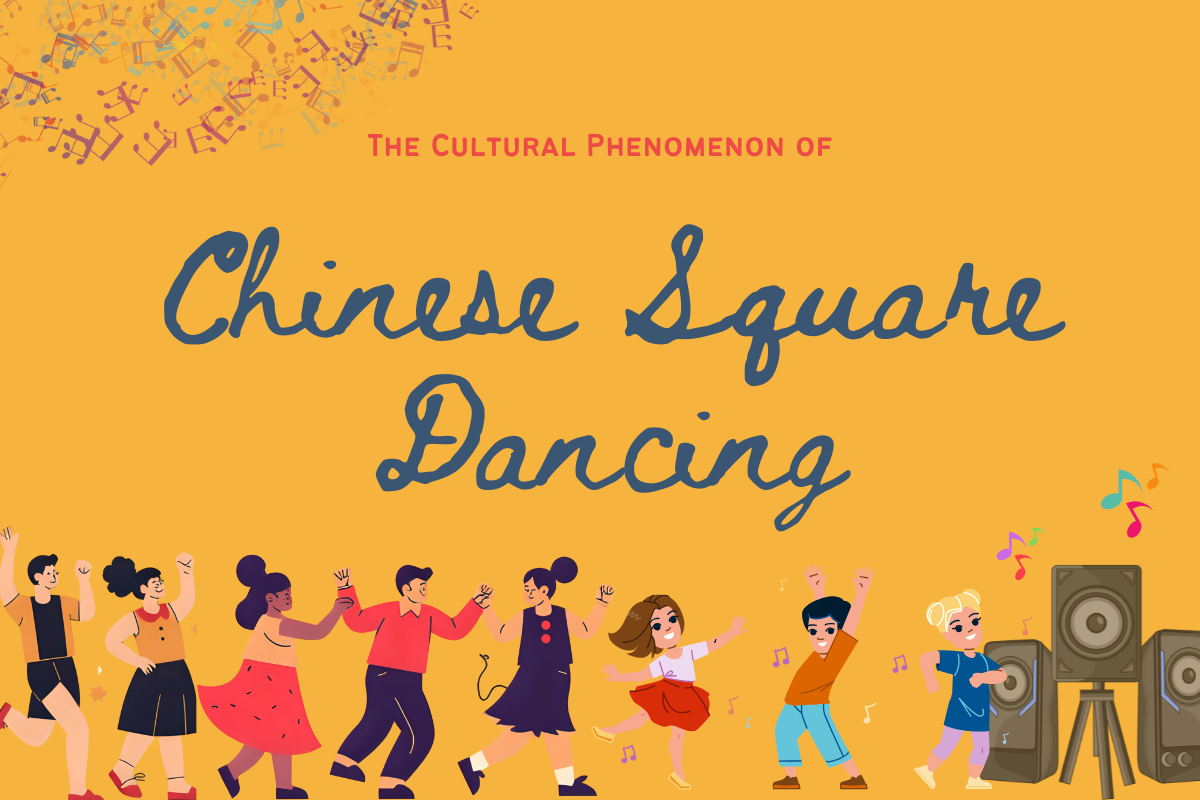
What exactly brings thousands of Chinese people, particularly middle-aged and elderly women, flooding into every corner of the city like the tide at 7:00 PM each night, dancing together to strong rhythmic beats? The answer lies in the bustling music, simple dance steps, and powerful sense of community. Behind the "Chinese-style fitness" of square dancing, lies a complex symphony of health, social interaction, belonging, and societal changes.
Reasons for Chinese Square Dancing
The popularity of square dancing is not accidental, with multiple social and cultural reasons behind it.
- Health Needs: This is the core reason. Square dancing is a low-intensity, rhythmic aerobic exercise, perfect for the elderly to stay fit, enhancing cardiovascular functions, improving coordination, and preventing age-related illnesses like osteoporosis.
- Social Interaction and Belonging: For many retirees or those whose children are not around, square dancing provides an excellent social platform. It helps them make friends, chat, relieve loneliness, find a sense of community, serving as a positive way to cope with the "empty nest" phenomenon.
- Mental and Cultural Enrichment: With an increase in living standards, the elderly have a growing need for mental and cultural activities. Square dancing, with its low threshold and high amusement factor, becomes an essential way for them to entertain and uplift themselves.
- Cost-Effective: Almost zero cost involved. Only requiring a sound system and a vacant space, without the need for expensive gym memberships, resulting in high public participation.
Characteristics of Square Dancing
Music Selection
Music is the soul of square dancing, with distinct characteristics. Strong rhythmic beats, mostly in 4/4 timing, with clear rhythms, emphasized drum beats, making it easy to follow and keep time.
The styles vary widely, often using classic old songs such as "Most Nationalistic Ethnic Trend," "Little Apple," "Lotus Moonlight," which are considered anthem-level tracks for square dancing. Internet popular songs and ethnic music (songs rich in Tibetan, Mongolian, Uyghur ethnic features) are also common. Additionally, Red songs and nostalgic tunes (such as "Jasmine Flower," "Nanniwan") are highly favored by the older generation. Many square dance songs have remix versions where the songs are re-mixed, sped up, and infused with stronger drum beats to become "square dance special versions."
Dance Moves
Simple and easy to learn, with strong repetitiveness: Movements typically revolve around simple steps and gestures, such as stepping, crossing steps, waving hands, turning around, making it easy for beginners to catch up quickly.
Incorporating multiple elements: Fusing elements from aerobics, ethnic dances (such as Dai ethnic dance, Xinjiang dance hand movements), ballroom dancing, and even some Tai Chi movements.
Well-organized choreography: Although it may seem casual, a dance team usually has a lead dancer or teacher, with movements structured and practiced, resulting in relatively orderly formations.
Common Times and Locations for Square Dancing
The main time for square dancing is concentrated from 7:00 PM to 9:00 PM, considered prime time after dinner and when most people are free. It may also occur in the early morning from 6:00 AM to 8:00 AM, primarily for morning exercise groups, typically smaller in scale than evening sessions. Additionally, activities may take place on weekends or holidays during the daytime.
Square dancing requires minimal space, only necessitating a flat open area and a portable sound system. Some common locations include:
- City squares: As the name suggests, this was the initial birthplace.
- Community grounds/parks: These are the most common locations, convenient for residents to participate.
- Neighborhood entrances/street-side vacant spaces: Any unused space as long as it does not disrupt traffic may be utilized.
Common Expressions related to Square Dancing
Common Vocabulary
领舞/老师 (lǐng wǔ / lǎo shī): the person in front of the team, leading the dance, usually skilled or responsible for teaching.
舞队/队伍 (wǔ duì / duì wǔ): a fixed square dance group that may have its own name, such as "Sunset Red Dance Team" or "Happy Sisters Dance Team."
站C位 (zhàn C wèi): internet slang, referring to standing in the most conspicuous position in the team.
抢地盘 (qiǎng dì pán): refers to minor friction happening between different dance teams competing for the best spot to dance, demonstrating a controversial aspect of square dancing.
Common Phrases (Dialogue)
Inviting others to join:
- "王阿姨,吃完饭没?一起去跳舞啊!"
"wáng ā yí, chī wán fàn méi? yī qǐ qù tiào wǔ a!"
"Aunt Wang, have you finished dinner? Let's go dance together!"
- "来来来,跟着后面跳就行了,很简单的!"
"lái lái lái, gēn zhe hòu miàn tiào jiù xíng le, hěn jiǎn dān de!"
"Come on, just follow behind and dance, it's very simple!"
On-site communication:
- "今天教新舞了,这个动作你看,是这样……"
"jīn tiān jiāo xīn wǔ le, zhè ge dòng zuò nǐ kàn, shì zhè yàng……"
"Today we are learning a new dance, watch this move, it goes like this..."
- "音乐声音够不够大?后面听得见吗?"
"yīn yuè shēng yīn gòu bù gòu dà? hòu miàn tīng de jiàn ma?"
"Is the music loud enough? Can those at the back hear it?"
- "大家队形站整齐一点哦!"
"dà jiā duì xíng zhàn zhěng qí yì diǎn o!"
"Let's keep the lineup neat!"
Chit-chat:
- "跳完舞一起去买菜/接孙子吗?"
"tiào wán wǔ yī qǐ qù mǎi cài / jiē sūn zi ma?"
"After the dance, shall we go buy groceries/pick up the grandchildren together?"
- "你这件新舞衣很好看啊,在哪里买的?"
"nǐ zhè jiàn xīn wǔ yī hěn hǎo kàn a, zài nǎ lǐ mǎi de?"
"Your new dance outfit looks nice, where did you buy it?"
Controversies and Solutions
Although square dancing is popular, noise disturbance issues have sparked a lot of social controversy. In recent years, as management has become more regulated and participants' quality has improved, many dance teams started:
- Consciously controlling the volume and activity timing.
- Using Bluetooth earphones, hosting "silent square dancing," significantly reducing conflicts.
- Governments are also guiding through methods such as designating specific areas and regulating activity times.
In conclusion, square dancing is a unique cultural spectacle in Chinese society, deeply reflecting the lives, spiritual needs, and contemporary trends of the common people, especially the middle-aged and elderly.