
Qingming Festival is coming again in China. Many of you have probably heard of this traditional Chinese festival. So, what is Qingming like? Ancient Chinese poets wrote many poems about it. Let’s enjoy a few of them and explore their meaning and emotion.
清明(qīng míng)
Qingming
poet: Du Mu(杜牧 dù mù)
清明时节雨纷纷,
qīng míng shí jié yǔ fēn fēn,
During the Qingming season, rain drizzles endlessly;
路上行人欲断魂。
lù shang xíng rén yù duàn hún.
Travelers on the road feel a deep sorrow in their souls.
借问酒家何处有?
jiè wèn jiǔ jiā hé chù yǒu?
May I ask where a tavern might be found?
牧童遥指杏花村。
mù tóng yáo zhǐ xing huā cūn.
A cowherd points afar to Apricot Blossom Village.
Simple analysis:
This poem shows loneliness in the spring rain of Qingming and a search for comfort. “雨纷纷(yǔ fēn fēn)” describes the natural scene of soft, continuous rain, but it also suggests sadness. “杏花村(xing huā cūn)” becomes a symbol of a poetic and peaceful place to rest the heart.
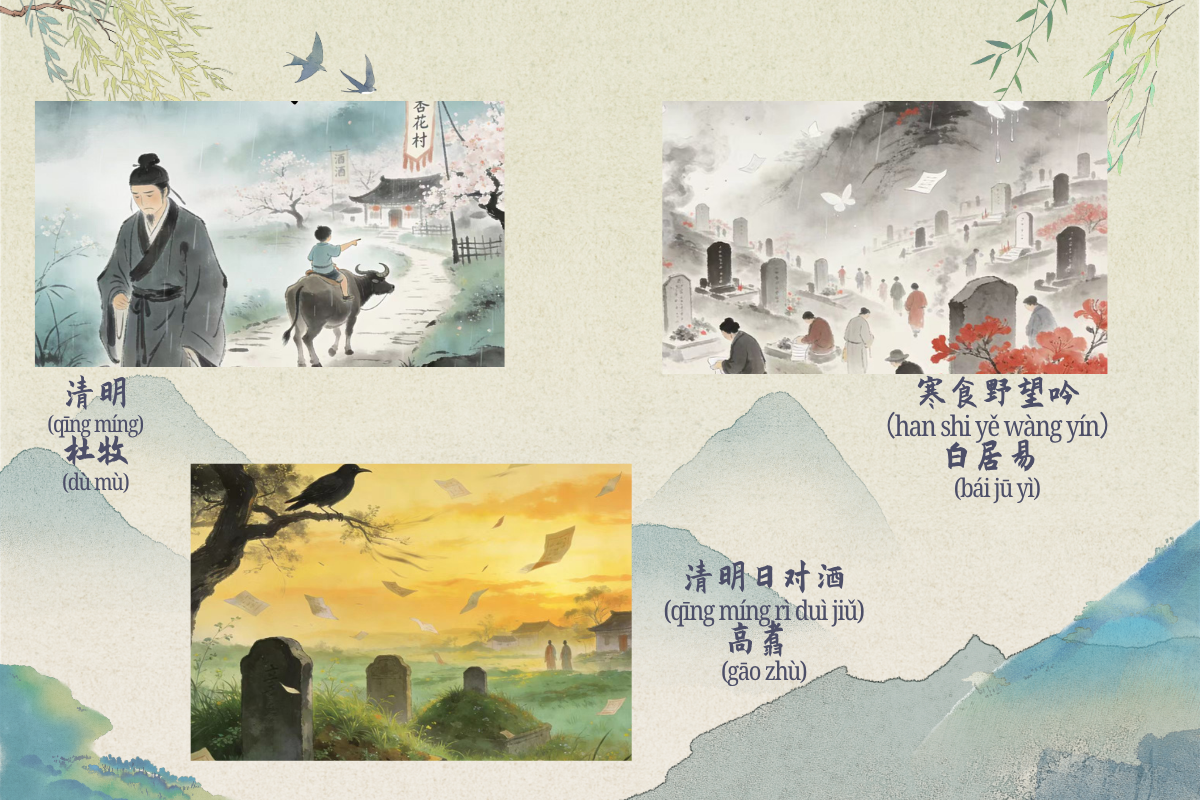
寒食野望吟(han shi yě wàng yín)
Wild Gazing on Cold Food Day
poet: Bai Juyi (白居易 bái jū yì)
乌啼鹊噪昏乔木,
wū tí què zào hūn qiáo mù,
Crows caw, magpies cry noisily in the dark tall trees;
清明寒食谁家哭?
qīng míng hán shí shéi jiā kū?
On Qingming and Cold Food Day, whose family is crying?
风吹旷野纸钱飞,
fēng chuī kuàng yě zhǐ qián fēi,
Wind blows across the open fields, and joss paper flies;
古墓累累春草绿。
gǔ mù lěi lěi chūn cǎo lǜ.
Ancient tombs lie one after another, covered with green spring grass.
Simple analysis:
This poem uses both sound and sight. The crying, bird calls, and wind create a sad mood, while the flying joss paper and green grass create a strong visual image. Together, they show both human grief during tomb-sweeping and the endless life of nature.
清明日对酒(qīng míng rì duì jiǔ)
Dringking Wine on Qingming Day
poet: Gao Zhu(高翥 gāo zhù)
南北山头多墓田,
nán běi shān tóu duō mù tián,
On the hills to the north and south, there are many graves;
清明祭扫各纷然。
qīng míng jì sǎo gè fēn rán.
During Qingming, people busily come to sweep tombs and make offerings.
纸灰飞作白蝴蝶,
zhǐ huī fēi zuò bái hú dié,
The ashes of burned paper fly like white butterflies;
泪血染成红杜鹃。
lèi xuè rǎn chéng hóng dù juān.
Tears and blood seem to dye the cuckoos red.
Simple analysis:
The poem uses vivid images. “白蝴蝶(bái hú dié)” compares paper ashes to white butterflies, and “红杜鹃(hóng dù juān)” suggests tears and blood. These images clearly express the sorrow of tomb-sweeping and the direct feeling of life passing away.
These poems all center on the key elements of Qingming—rain, tomb-sweeping, and the cycle of nature. Their language is concrete, and their emotions are universal. The Qingming Festival in ancient poetry is a footnote written by the Chinese people in the most concise language for spring and yearning. These verses may be brief, but they carry the common emotions we have shared over the past thousand years on this special day: the remembrance of the deceased, the cherishing of the spring light, and the hope tinged with warmth and moisture in the drizzle. Learning them is like obtaining a key. I hope it can help you open a small window, allowing you not only to see the rhythm of the words, but also to smell the fragrance of mugwort, feel the warmth of the spring breeze, and understand the beauty of this festival where solemnity and vitality coexist.