China has a long-standing funeral culture rich with traditions that blend Confucian ethics, Taoist beliefs, Buddhist concepts, and folk beliefs, forming a unique system of ceremonies and customs.

Key Procedures in Funeral Customs
Terminal Care and Announcing the Death
- When a loved one is terminal, family members stay by their side, a practice known as "seeing off."
- After passing away, the deceased is cleaned, dressed in burial clothes, laid in the main hall with the head facing inwards and feet outwards, and covered with paper or cloth.
- The death is then announced to relatives and friends, traditionally not through direct visits but through oral announcements or obituaries.
Embalming and Final Farewell
- There are two stages - "small embalming" involves dressing the deceased, and "big embalming" involves placing the body in a coffin. Before sealing the coffin, family members pay their respects and bid their final farewells.
- Traditionally, the coffin material and orientation are significant, and burial happens after 3, 5, or 7 days to await an auspicious day for interment.
Vigil and Condolence Visits
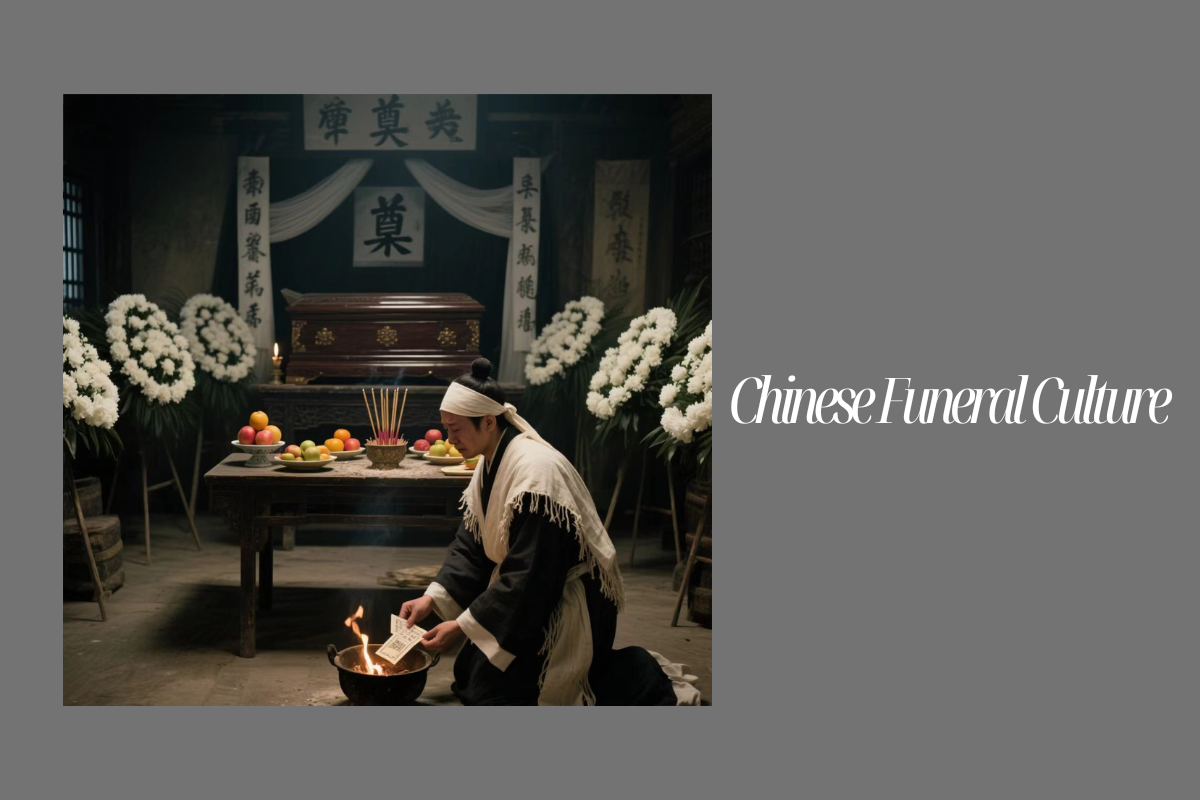
- Family members and friends hold a vigil at the wake to express their condolences. Visitors burn paper money, light incense, and pay respects, with the family responding in kind.
- There is a custom of mourning, especially among female relatives expressing grief.
Funeral Procession and Burial
- The burial procession departs on an auspicious day, carrying the coffin to the burial site. Along the way, friends and family bid farewell, and in some regions, paper money is scattered as a symbol of tribute.
- At the burial site, burial rites are performed, the coffin is buried, and a mound of earth is created.
- In modern cities, cremation is common, with ashes typically interred in cemeteries, columbaria, or kept at home.
Mourning and Memorial Services
- It is believed that the soul returns home in the first seven days after death, leading to the "seven-day ceremony," repeated every seven days for a total of seven times, culminating in the "forty-ninth day" service.
- Subsequent memorial services, including the hundredth day ceremony and annual rituals, sustain a long-term remembrance of filial piety 孝道(xiàodào).
孝道(xiàodào), noun, filial piety
Example:
- Filial piety is an important virtue in China.
孝道是中国重要的美德。
xiào dào shì zhōng guó zhòng yào de měi dé. - He shows filial piety by taking care of his parents.
他通过照顾父母来体现孝道。
tā tōng guò zhào gù fù mǔ lái tǐ xiàn xiào dào.
Funeral Customs and Symbolism
Burial Clothing and Coffins
- Burial clothes are usually in odd numbers (three, five, or seven pieces), primarily in plain colors and avoiding bright hues like red.
- Coffins symbolize the deceased's "home" and are made with sturdy materials, with the homophonic association of coffins and "official wealth" conveying auspicious meanings.
Paper Money and Offerings
- The burning of paper money and paper replicas (houses, vehicles, phones, etc.) is believed to benefit the deceased in the afterlife.
- Offerings typically include incense, candles, fruits, pastries, and alcohol, signifying sustenance for the departed.
Mourning Attire and Mourning Staff
- Family members wear mourning attire of varying grades based on their relationship with the deceased, traditionally in white but modern variations include black veils and white flowers.
- Mourners carry mourning staffs (cry-lamentation rods), symbolizing grief and reliance on elders.
Feng Shui and Burial Grounds
- Attention to burial site feng shui is significant, as good feng shui is believed to bless descendants and secure their fortune.
- Selection of burial site, orientation, and layout are all considered carefully.
Diverse Funeral Customs among Different Ethnicities and Regions
China, a multiethnic country, showcases unique funeral customs across regions and ethnicities:
- Han Ethnicity: Mainly adhering to earth burial (now transitioning to cremation), emphasizing ritual 仪式的(yíshì) procedures and family involvement.
仪式的(yíshì), adjective, ritual
Example:
- The ritual ceremony was held at dawn.
仪式在黎明时分举行。
yí shì zài lí míng shí fēn jǔ xíng. - These ritual objects are very ancient.
这些仪式用品非常古老。
zhè xiē yí shì yòng pǐn fēi cháng gǔ lǎo.
- Tibetan Ethnicity: Commonly practice sky burial, considering it the ultimate charity to offer the body to vultures.
- Hui and other Muslim ethnicities: Follow earth burials, without coffins, wrapping bodies in white cloth, burying them with the head facing Mecca, emphasizing promptness and simplicity.
- Mongolian Ethnicity: Tradition includes sky burials, natural burials, and earth burials, valuing harmonious coexistence with nature.
Some southern regions, such as the Hakka people, practice "secondary burial," where remains are exhumed after a period and placed in an ossuary for final interment.
Modern Transformations in Funeral Practices
As society progresses, Chinese funeral customs continue to evolve:
- Widely adopted cremation for land conservation and environmental reasons, especially in urban areas.
- Burial of ashes in public cemeteries, columbaria, and emerging eco-burial methods like sea burials and tree burials.
- Simplification of funeral rituals due to the fast-paced modern lifestyle, with options like memorial services and new formats like memorial gatherings and body-bidding services.
Despite the simplification, the remembrance of ancestors and family ethics remain vital, with many families upholding traditional practices such as ancestral worship and grave sweeping.
Significance of Funeral Culture
- Reflection of Filial Piety: Funerals serve as a significant avenue for exhibiting filial piety by offspring, emphasizing the importance of cherishing and respecting the past.
- Incarnation Beliefs: Influenced by Buddhism and Taoism, there is a belief that the soul endures beyond death, requiring ceremonies for its repose or rebirth.
- Application of Yin Yang and Five Elements: Feng shui of burial sites ("Yin homes") is believed to influence the fortune of the family, requiring geomancers to select auspicious locations.
Chinese funeral culture serves as both a farewell to the departed and a reflection on life's meaning. As society advances, traditional customs harmonize with modern viewpoints, but the core values of reverence for ancestors and appreciation of familial bonds remain unchanged.