
Ancient Chinese weddings were a significant part of traditional culture, following the "Six Rites" process, which blended the system of filial piety, ethical beliefs, and symbolic blessings. While details varied across different dynasties, the core rituals remained consistent.
Core Wedding Procedures
Nearly all ancient Chinese weddings followed the Zhou Dynasty's "Six Rites" as the standard. According to the "Book of Rites," a traditional wedding required six solemn steps:
- Proposal (Betrothal):
The groom's matchmaker would bring gifts (often wild geese symbolizing loyalty) to the bride's family to propose. If the bride accepted, she would receive the gifts. - Inquiry (Matching Birth Dates):
Both parties would exchange birth dates, conduct fortunetelling, ensuring compatibility based on astrological signs. - Proposal (Engagement):
Following auspicious predictions, the groom would formally present the betrothal gifts and finalize the engagement. - Presenting Betrothal Gifts:
The groom would deliver betrothal gifts to the bride's family, traditionally consisting of silk, deer skin in the Zhou Dynasty, later evolving to gold, silver, and silk in the "Three Letters, Six Etiquettes." - Choosing an Auspicious Wedding Date:
The groom would select a wedding date, seeking the bride's approval. - Fetching the Bride:
The groom would personally escort the bride from her family home, with the ceremony held at dusk (symbolizing the transition from the light to the dark), giving rise to the term "Hunyin" for marriage 婚姻(hūn yīn).
婚姻(hūn yīn), noun, marriage
Example:
- Their marriage lasted 50 years.
他们的婚姻持续了50年。
tā men de hūn yīn chí xù le wǔ shí nián. - Marriage requires understanding from both sides.
婚姻需要双方的理解。
hūn yīn xū yào shuāng fāng de lǐ jiě.
Wedding Day Ceremonies
- Fetching the Bride:
The groom, dressed in ceremonial attire (such as the dark robes during the Zhou Dynasty), would arrive at the bride's home, performing the formal geese offerings. - Paying Respect to Ancestors:
Post-Tang Dynasty, the custom of bowing to heaven and earth, the ancestors, and each other became prevalent, signifying respect for divine and familial blessings. - Drinking from the Same Cup:
The newlyweds would share a cup of wine (poured from a split gourd into two ladles), symbolizing shared joys and sorrows. - Hair Combing Ceremony:
Since the Tang Dynasty, the couple would each take a strand of hair to bind together in a "unity knot," symbolizing their union as husband and wife. - Entering the Bridal Chamber:
After the ceremonies, the couple would enter the bridal chamber, sometimes sprinkling dates and peanuts, symbolizing the wish for early offspring.
Romantic 浪漫的(làng màn de) Touches in the Wedding
浪漫的(làng màn de), adjective, romantic
Example:
- The movie tells a romantic love story.
这部电影讲述了一个浪漫的爱情故事。
zhè bù diàn yǐng jiǎng shù le yí ge làng màn de ài qíng gù shì. - Paris is considered a romantic city.
巴黎被认为是一座浪漫的城市。
bā lí bèi rèn wéi shì yí zuò làng màn de chéng shì.
Despite the solemnity of the rituals, ancient Chinese weddings were infused with romantic details:
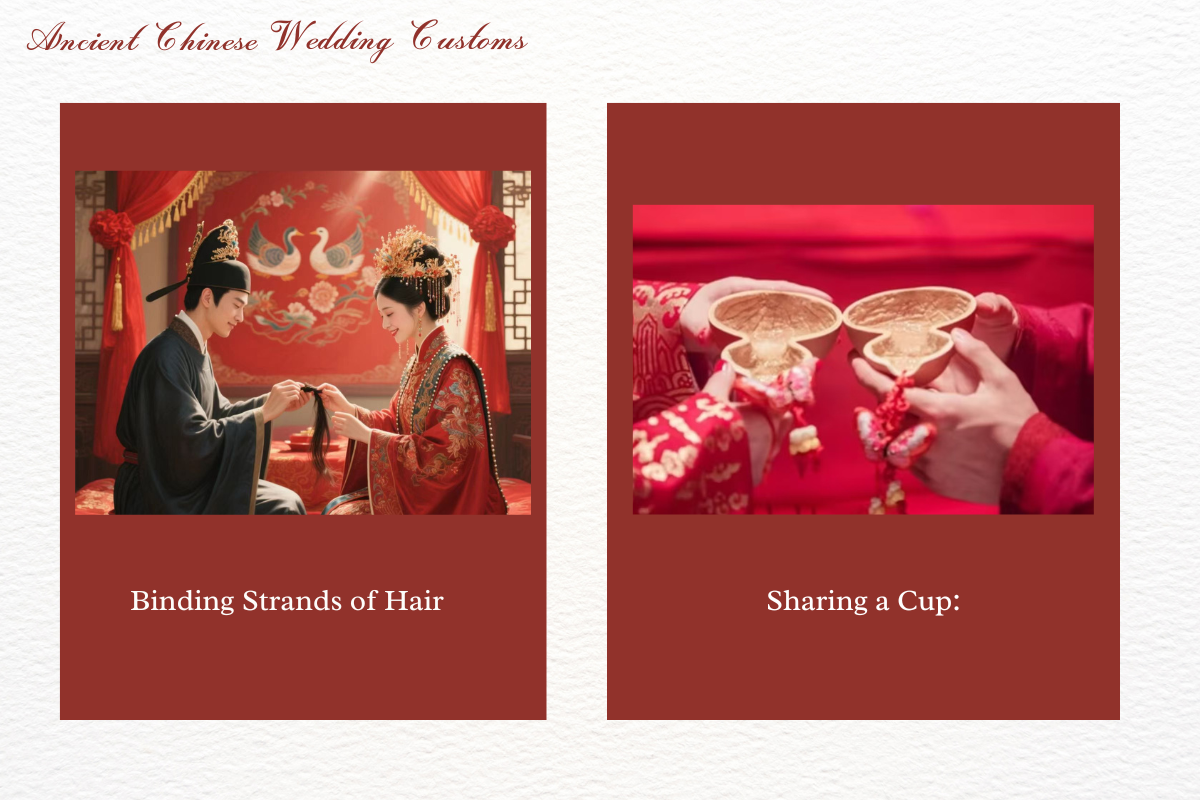
- Binding Strands of Hair:
Newlyweds would each cut a strand of hair on their wedding night and bind them together, signifying their hearts and minds united as one. - Sharing a Cup:
Wine would be served in a split gourd, and the couple would drink from it together, showcasing their future shared experiences. - Poetry Exchange:
In the Tang Dynasty, the bride would use a fan to cover her face, unveiling it only after the groom recited a poem, such as Li Shangyin's verse. - Sprinkling the Bridal Chamber:
In the Song Dynasty, the bride's family decorated the bridal chamber with red dates and peanuts, symbolizing fertility.
Other Significant Customs
Across different regions and dynasties in China, there were various additional customs that highlighted the grandeur and romance of wedding traditions:
- Phoenix Crown and Red Phoenix Gown:
From the Ming Dynasty onwards, brides wore red ceremonial attire and a phoenix crown, while grooms donned scholarly robes. - Lifting the Veil:
In the Song Dynasty, the bride covered her face with a red veil, to be revealed by the groom in the bridal chamber. - Joyous Sedan Chair Procession:
During the Ming and Qing Dynasties, the bridal sedan chair took a circuitous route to ward off evil spirits and invite auspiciousness. - Three Days of Return to the Bride's Home:
On the third day after the wedding, the couple would present gifts to the bride's family to show respect.
The romance of ancient Chinese weddings lies in their seamless integration of kinship, nature, and poetry. Behind the elaborate rituals lay a deep reverence for marriage and the most solemn commitment to "holding hands and growing old together."