Chinese has a rich and vivid vocabulary to describe human emotions. Many expressions vividly reflect how our bodies feel about emotions. Here are some key terms for core emotions.
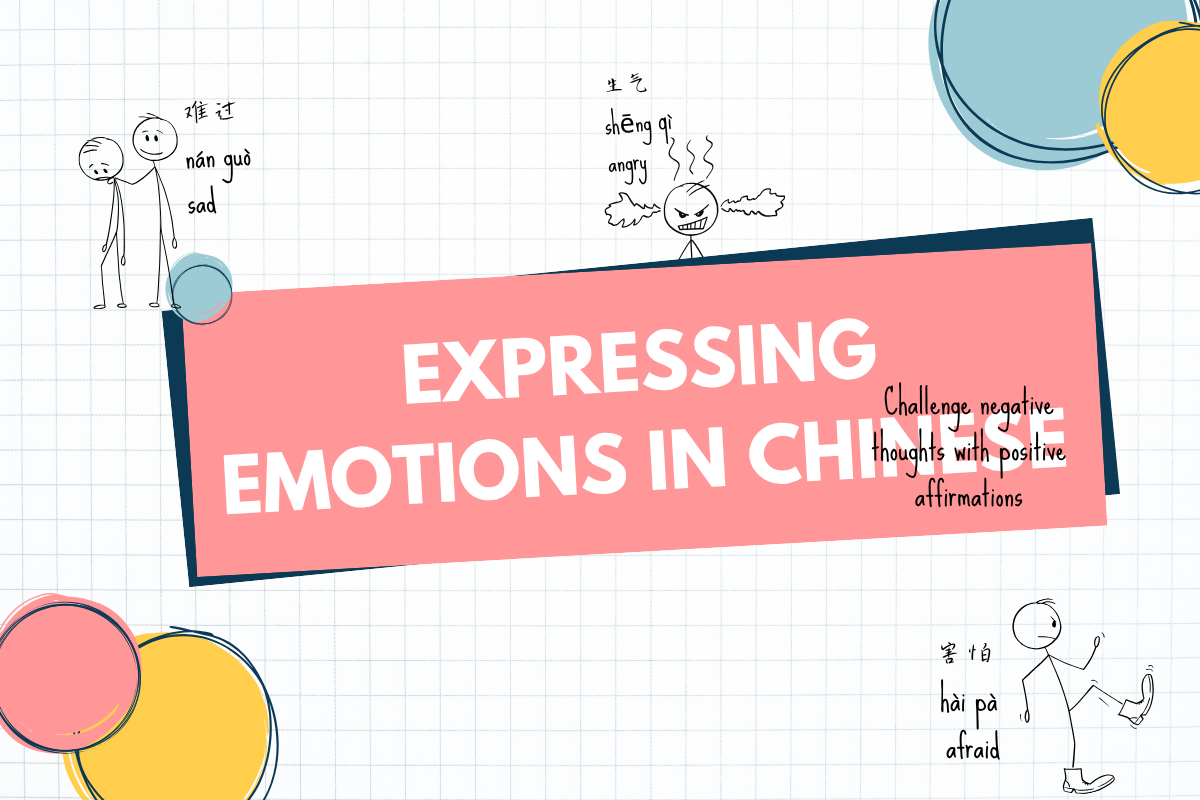
生气 (shēng qì) :angry
Explanation: Literally means "to generate gas," which vividly depicts the feeling of anger building up inside, similar to the English phrases "get angry" or "be furious."
Example:
- 他看到混乱的房间后非常生气。
tā kàn dào hǔn luàn de fáng jiān hòu fēi cháng shēng qì.
He was very angry after seeing the messy room.
开心 (kāi xīn): happy
Explanation: Literally means "to open one's heart," describing a joyful and pleasant mood, where one feels bright and relaxed inside. This is one of the most common words for expressing happiness.
Example:
- 收到礼物让她很开心。
shōu dào lǐ wù ràng tā hěn kāi xīn.
Receiving a gift made her very happy.
难过 (nán guò): sad
Explanation: Literally means "hard to get through," describing feelings of sadness or discomfort, as if time becomes difficult to endure due to sorrow. It is equivalent to "sad" or "upset."
Example:
- 听到坏消息,他很难过。
tīng dào huài xiāo xi, tā hěn nán guò.
He was very sad to hear the bad news.
惊讶 (jīng yà): surprised
Explanation: Describes the feeling of astonishment and surprise due to unexpected events. The intensity can range from "surprised" to "astonished."
Example:
- 他突然出现,让我很惊讶。
tā tú rán chū xiàn, ràng wǒ hěn jīng yà.
He suddenly appeared, which surprised me.
害怕 (hài pà): afraid
Explanation: Indicates feelings of fear or dread. It is synonymous with "fear," but "害怕" is more commonly used in spoken language.
Example:
- 我小时候害怕黑暗。
wǒ xiǎo shí hòu hài pà hēi àn.
I was afraid of the dark when I was a child.
尴尬 (gān gà): embarrassed
Explanation: Describes a situation where one feels awkward or uncomfortable, feeling embarrassed or uneasy. It corresponds directly to "embarrassed."
Example:
- 在人群中摔倒让他很尴尬。
zài rén qún zhōng shuāi dǎo ràng tā hěn gān gà.
Falling in front of the crowd made him very embarrassed.
兴奋 (xīng fèn): excited
Explanation: Describes a state of being emotionally stirred or thrilled, making it hard to stay calm due to anticipation or joy. It is equivalent to "excited."
Example:
- 孩子们对明天的旅行感到非常兴奋。
hái zi men duì míng tiān de lǚ xíng gǎn dào fēi cháng xīng fèn.
The children are very excited about tomorrow's trip.
累 (lèi): tired
Explanation: This is a very basic and important word that indicates physical or mental fatigue. It is equivalent to "tired."
Example:
- 工作了一整天,我现在很累。
gōng zuò le yī zhěng tiān, wǒ xiàn zài hěn lèi.
I am very tired after working all day.
Can you match these emotions with facial expressions? Can you describe other emotions in Chinese? Share with your friends!