
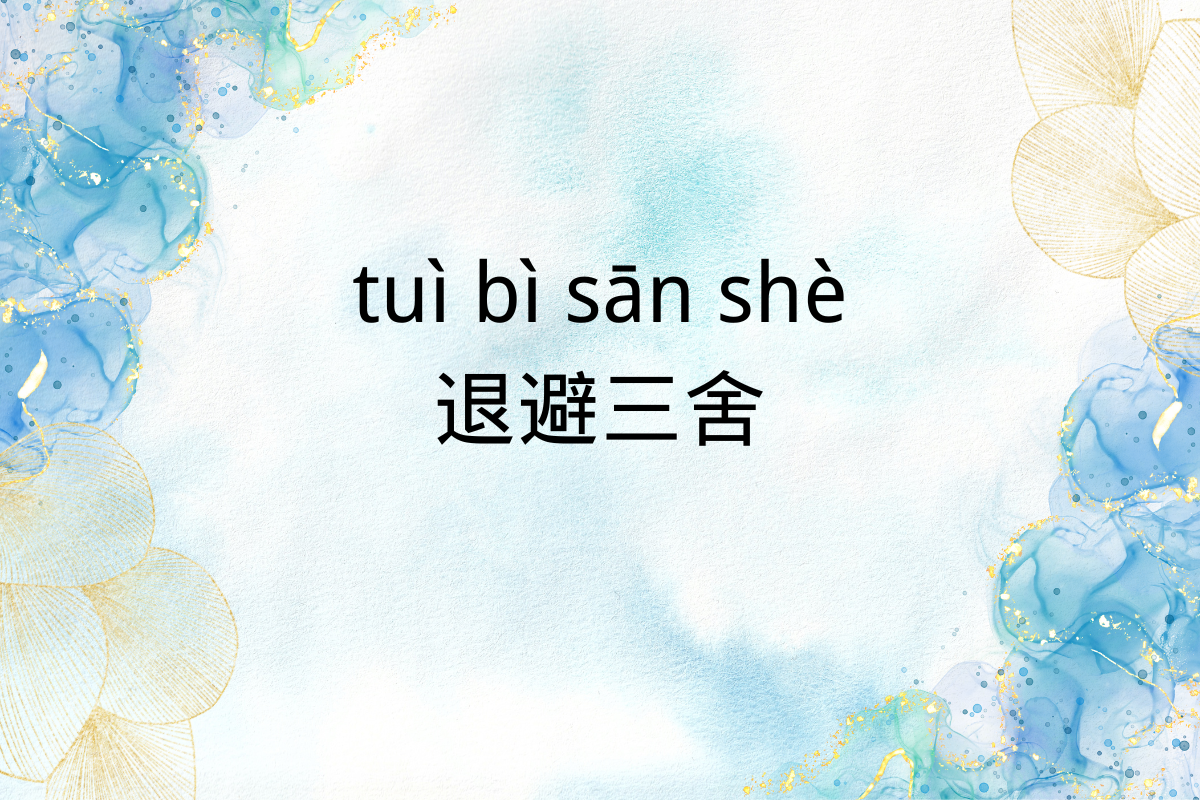
In the realm of ancient Chinese philosophy, there exists a profound concept known as "退避三舍" (tuì bì sān shè), which translates to "stay away" or "withdraw three paces." This principle, rooted in Taoist wisdom, emphasizes the importance of discretion, prudence, and strategic retreat in the face of adversity or conflict. Let us delve into a tale that illustrates the essence of this timeless teaching.
The Story:
In a bustling village nestled amidst verdant hills, there lived a wise old sage revered for his counsel and insight. One day, as the village bristled with tension and animosity between two rival factions, the sage was approached by a concerned villager seeking guidance.
"O Wise聪明的(cōng míng de) One," the villager implored, "our village is engulfed in strife, with bitterness and resentment tearing us apart. What should we do?"
The sage listened intently, his eyes twinkling with wisdom. After a moment of contemplation, he beckoned the villager to follow him to the village square, where the two rival factions stood poised for conflict.
Addressing the gathered crowd, the sage spoke in a voice that carried the weight of ages. "Dear villagers," he began, "I bring you a tale of profound wisdom—a lesson passed down through generations."
He recounted the tale of two mighty rivers, each vying to claim supremacy over the land through brute force and unyielding currents. For years, they clashed and surged against each other, their waters churning with fury.
Yet, in the midst of their relentless struggle, a humble stream quietly meandered its way through the valley, avoiding the tumultuous clash of the rivers. While the rivers raged on in their quest for dominance, the stream flowed steadily, nurturing life along its tranquil banks.
"The lesson, dear villagers," the sage concluded, "is simple yet profound. In the face of conflict, it is often wiser to follow the path of the stream—to withdraw three paces, to stay away. For in retreat, there lies strength, wisdom, and the preservation of peace."
聪明的(cōng míng de),adj,wise
- She gave me some wise advice.
她给了我一些聪明的建议。
Tā gěi le wǒ yīxiē cōng míng de jiànyì. - The wise owl hooted softly in the night.
聪明的猫头鹰在夜晚轻声叫。
Cōng míng de māotóuyīng zài yèwǎn qīng shēng jiào.

The Lesson:
In our journey through life, we encounter countless challenges and conflicts, both big and small. In these moments, the wisdom of "Stay Away离开(lí kāi)” offers us a guiding light—a reminder to pause, reflect, and choose our battles wisely.
离开(lí kāi),verb,away
- I want to away from the crowded city and find peace in the countryside.
我想离开拥挤的城市,在乡村找到平静。
Wǒ xiǎng líkāi yōngjǐ de chéngshì, zài xiāngcūn zhǎodào píngjìng. - I want to away from school.
我想离开学校。
Wǒ xiǎng líkāi xuéxiào. - When the argument got too intense, she decided to "stay away" and take a break.
争论变得太激烈时,她决定"退避三舍",休息一下。
Zhēnglùn biàn dé tài jīliè shí, tā juédìng "tuì bì sān shè", xiūxí yīxià. - He chose to "withdraw three paces" rather than confront his angry neighbor.
他选择"退避三舍",而不是与愤怒的邻居对抗。
Tā xuǎnzé "tuì bì sān shè", ér bùshì yǔ fènnù de línjū duìkàng. - When disagreements arose, they agreed to "stay away" from discussing sensitive topics.
当意见分歧出现时,他们决定"退避三舍",避免讨论敏感话题。
Dāng yìjiàn fēnqí chūxiàn shí, tāmen juédìng "tuì bì sān shè", bìmiǎn tǎolùn mǐngǎn huàtí.