Hanzi Alive!(8)

Tuesday, May 6, 2025

Chinese characters are like building blocks - '木(mù)' is a tree, '本(běn)' is its roots (the source of life), '林(lín)' is two trees forming a shady grove, and '森(sēn)' is three trees creating a forest. From 1 to 3, witness the magical growth of nature in Chinese characters!

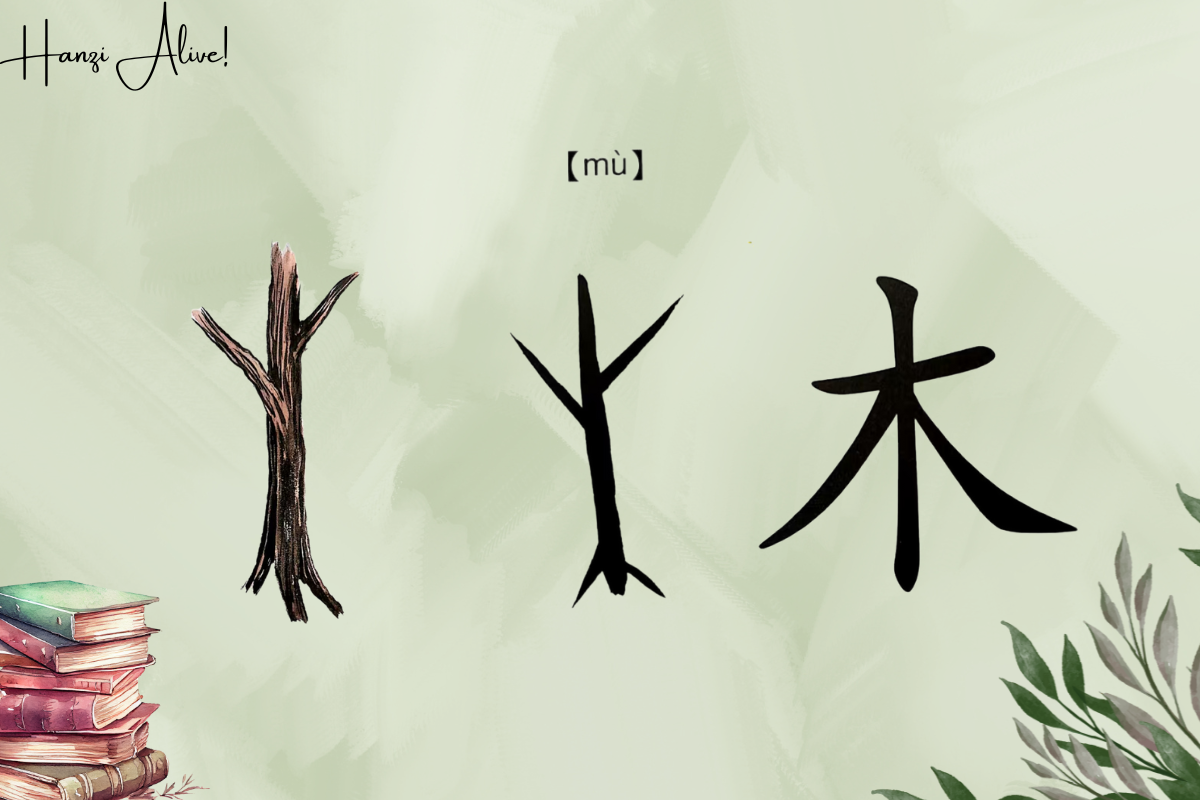
木()

Explanation:

  • "木()", representing "trees" or "wood," is another pictograph. The vertical line symbolizes the tree trunk, the horizontal line denotes branches, and the slanting lines at the bottom represent the roots.
Example:

  • This is a piece of wood.  
    这是一块木头。  
    Zhè shì yí kuài mù tou.
  • He draws with a wooden stick.  
    他用木棍画画。  
    Tā yòng mù gùn huà huà.

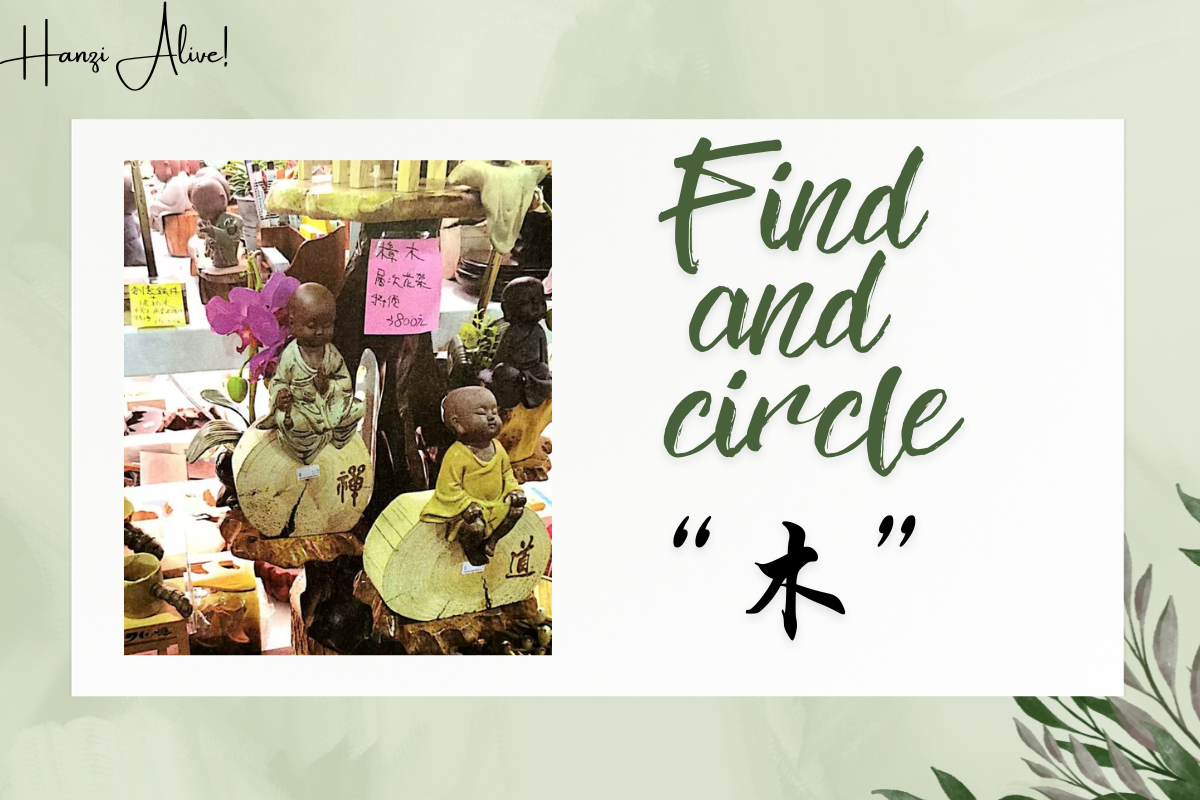
Find and circle "木" in the picture:
本(běn)

Explanation:

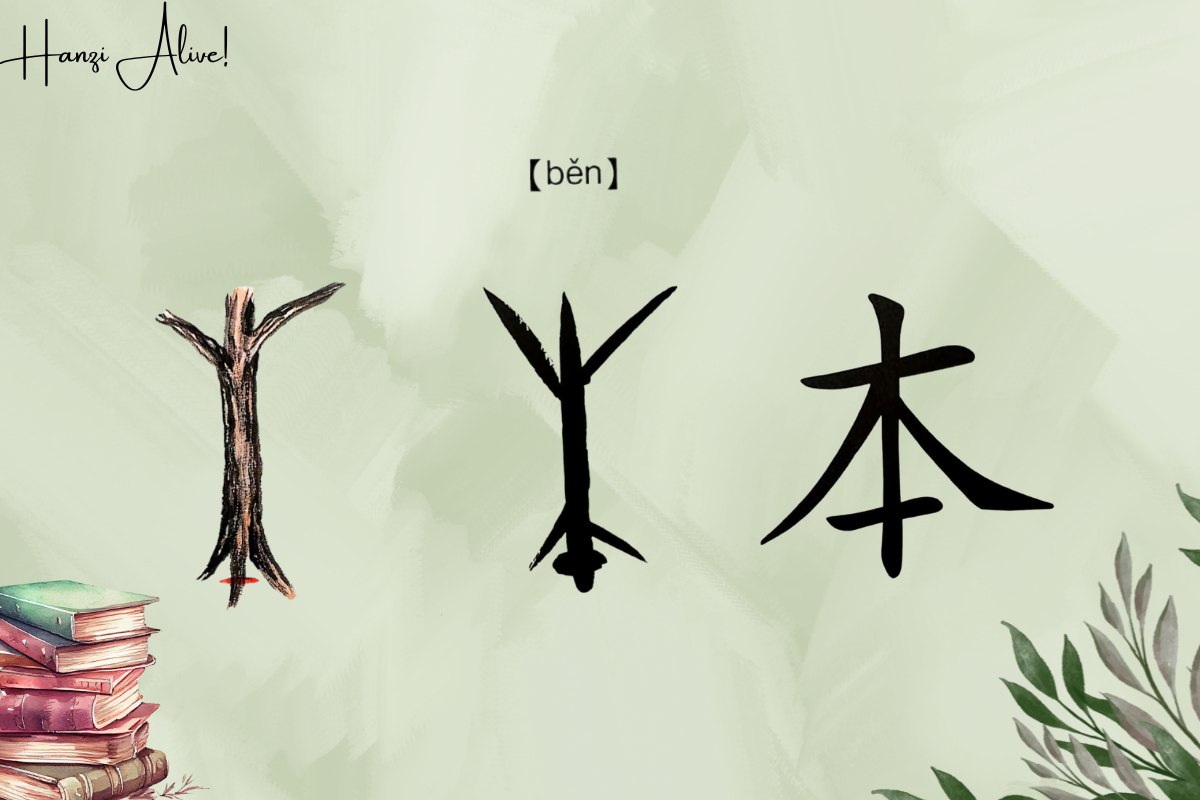
  • Adding a line to mark the roots in "木" creates the character "本(běn)" ."本" signifies "roots" or "origin." Remember the character "日()" from earlier in the book? Combining "日" and "本" forms "日本(rì běn)" ,which means Japan. The Japanese name their country "日本(rì běn)" because they consider themselves the land where the sun rises.
Example:

  • This is my book.  
    这是我的书本。  
    Zhè shì wǒ de shū běn.
  • I originally wanted to go to the park.  
    我本来想去公园。  
    Wǒ běn lái xiǎng qù gōng yuán.

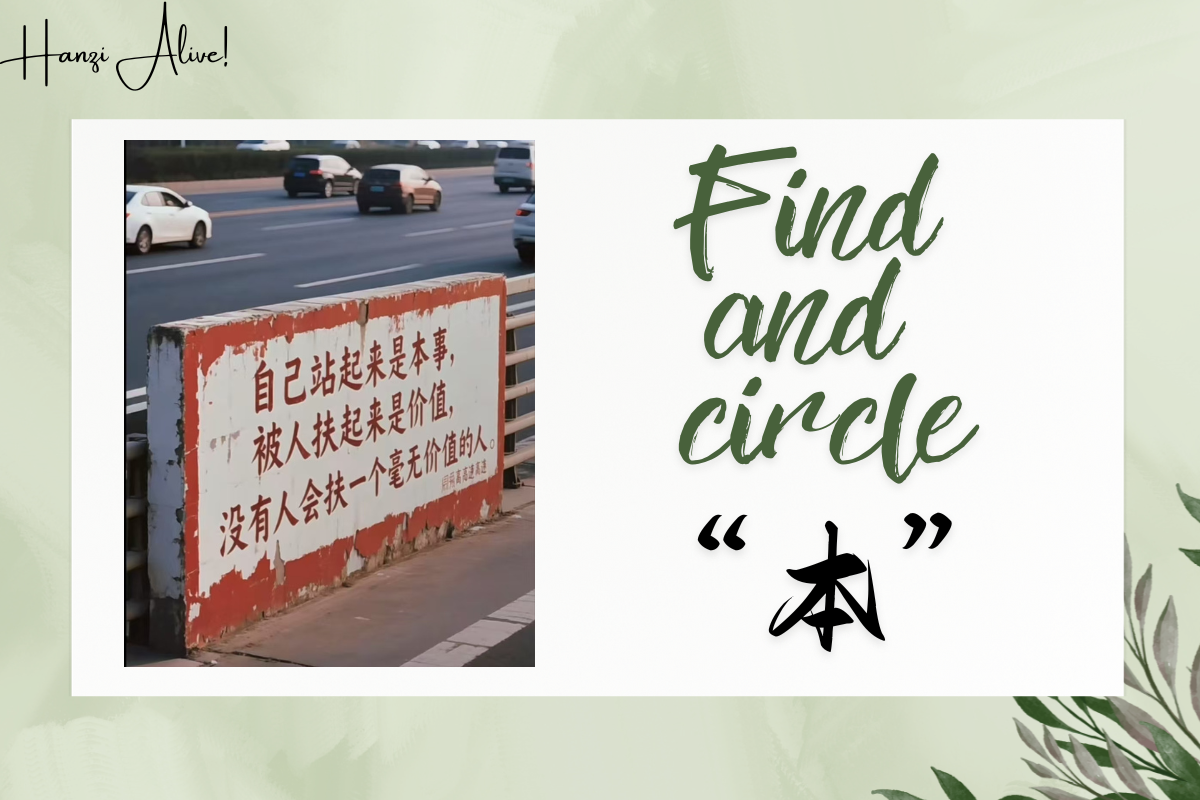
Find and circle "本" in the picture:
林(lín)

Explanation:

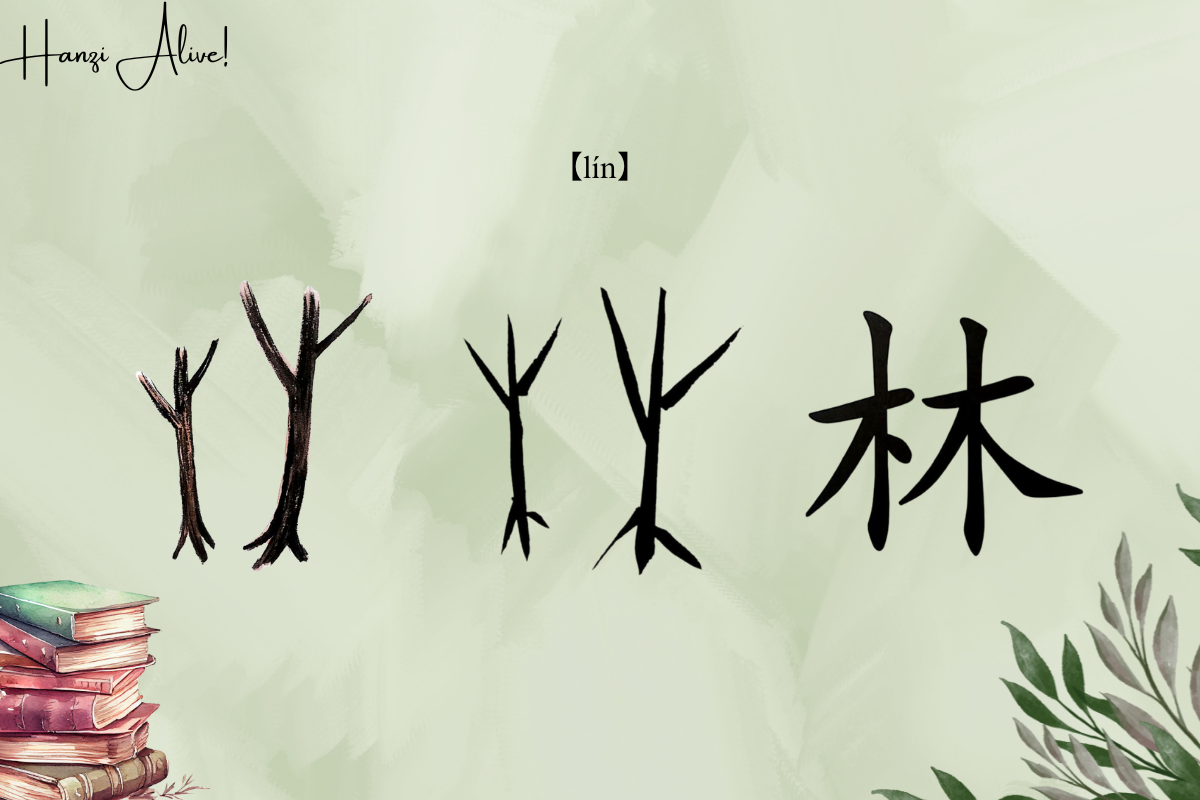
  • Two "木" characters come together to create "林(lín)", representing a collection of trees or "the woods."
Example:

  • There are many birds in the woods.  
    树林里有很多鸟。  
    Shù lín lǐ yǒu hěn duō niǎo.
  • He likes to walk in the forest.  
    他喜欢在林中散步。  
    Tā xǐ huān zài lín zhōng sàn bù.

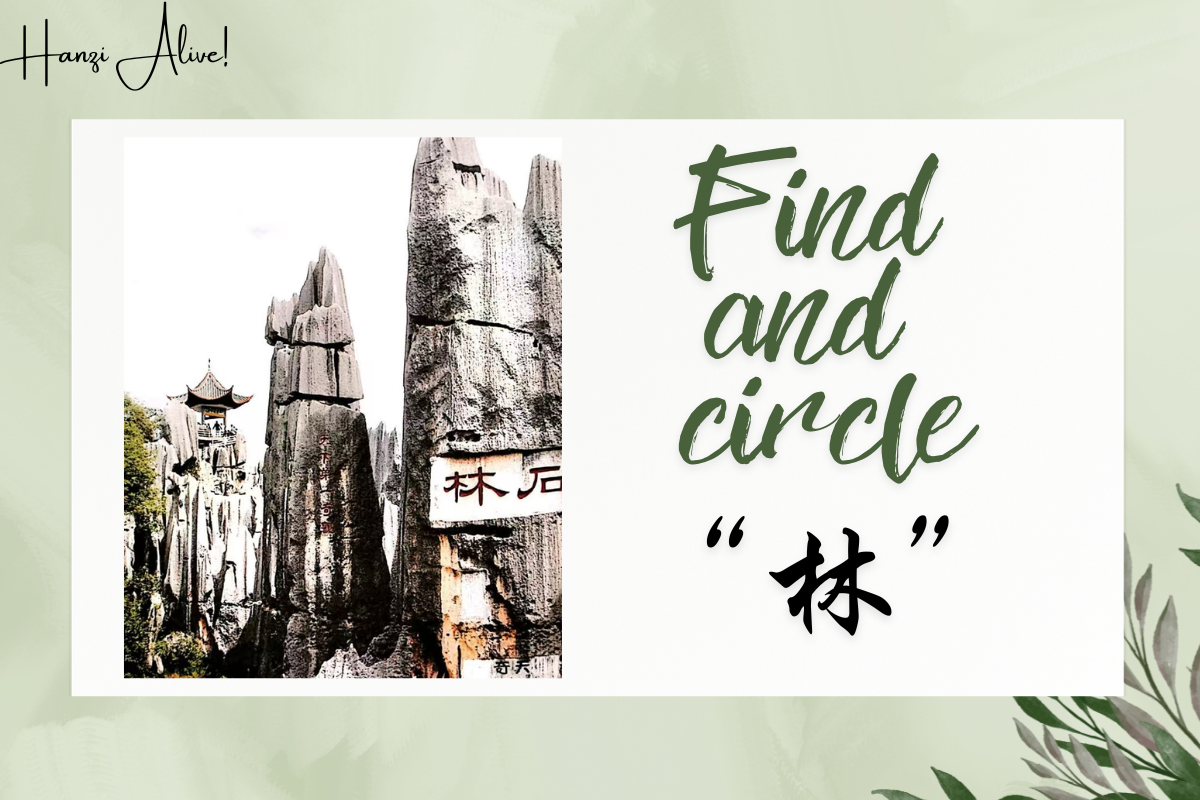
Find  and circle "林" in the picture:
森(sēn)

Explanation:

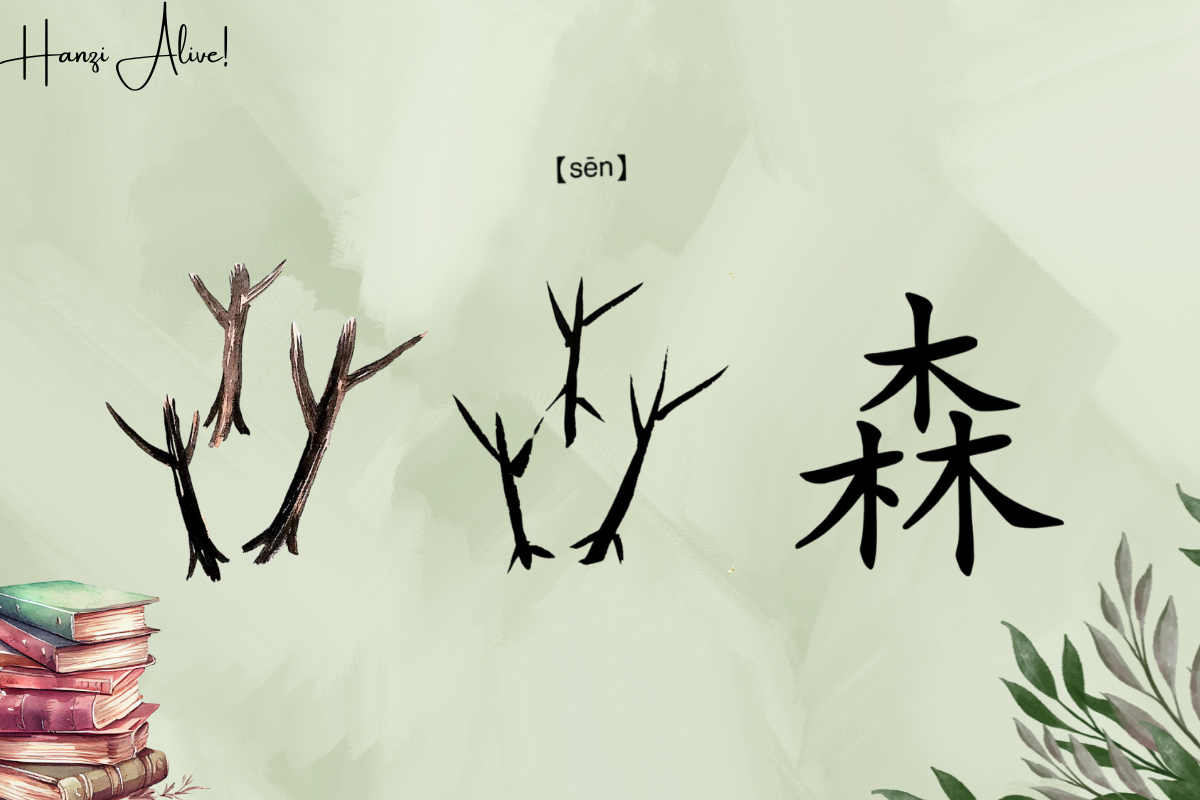
  • Three "木" characters, symbolizing three trees, combine to form a forest, represented by "森(sēn)" ."森" also means "forest," and in Chinese, it's common to use "森" and "林" together as "森林" to mean "forest."
Example:

  • The forest is big and beautiful.  
    森林很大很美。  
    Sēn lín hěn dà hěn měi.
  • The forest is very quiet at night.  
    夜晚的森林很安静。  
    Yè wǎn de sēn lín hěn ān jìng.

Find  and circle "森" in the picture:
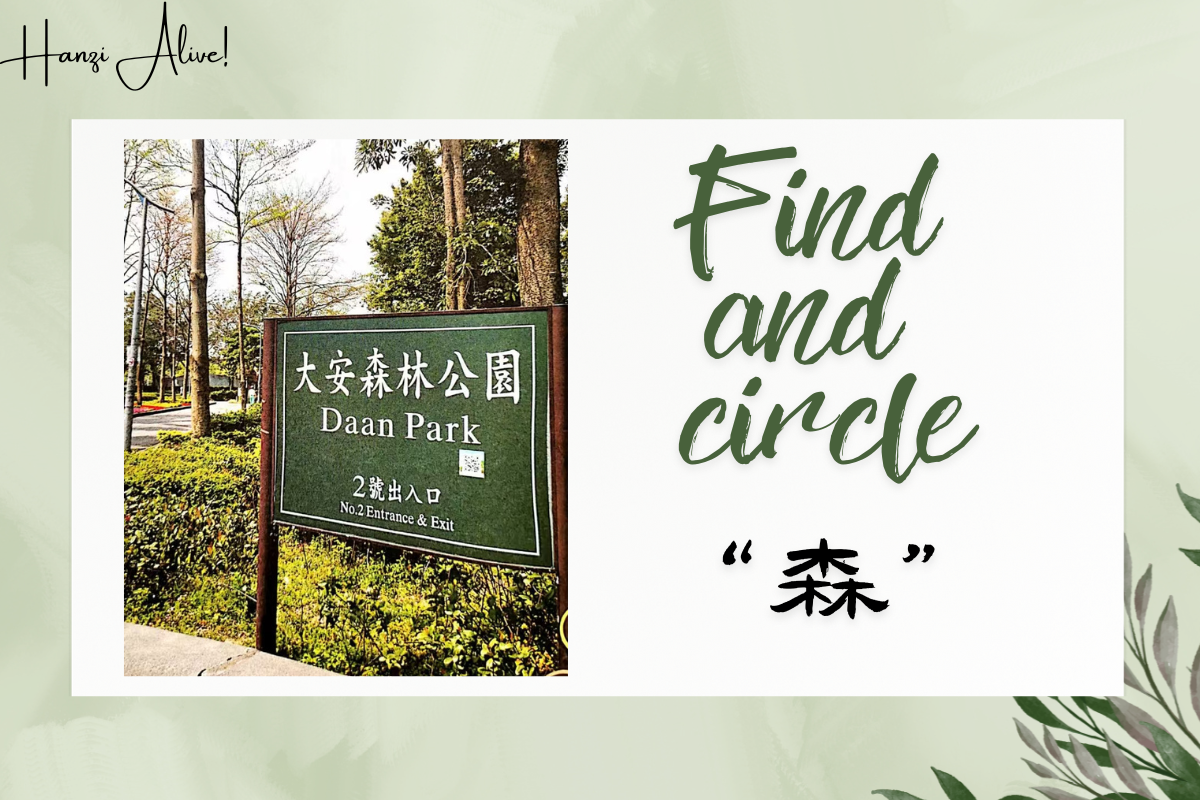
Now that you've unlocked the art of Chinese character composition: one tree forms a character, two trees form a word, and three trees create a painting. The next time you see the character '森,' you may hear the rustling sound of an entire forest.

Sign up for a free trial now!

FAQ / Tips

We offer secure and convenient payment options, including PayPal. PayPal is a widely recognized and trusted online payment platform that provides a secure way to make transactions. We also follow industry-standard security protocols to ensure the safety of your personal and financial information.
At Chinese Learning, protecting our customers' personal information is a top priority. We have implemented robust security measures to safeguard your data and prevent any unauthorized access or disclosure. For further information on our privacy practices, please refer to our Privacy Policy, which outlines our commitment to data protection and privacy.
We offer highly flexible class schedules that cater to your needs, with lessons available from 7am to 10pm Beijing time, seven days a week.This allows you to conveniently take lessons at any time and from any location that suits your schedule.
Certainly, we offer a complimentary 30 - minute trial lesson for you to experience our services before committing to a purchase.This will allow you to gain a better understanding of our qualified tutors, innovative teaching methods, comprehensive class materials, and more.We are committed to providing you with the highest level of service and ensuring your satisfaction with our courses.
Our students come from a wide range of ages, from 3 years old to over 80 years old. Our courses are tailored to each student's age and proficiency level to ensure they can receive maximum benefit and progress. Whether you want to learn Chinese as a second language or improve your existing Chinese skills, we can provide you with courses and resources that are suitable for you
Before starting any Chinese language course, the teacher will assess your Chinese language proficiency level through a placement test.This helps to determine your current level of understanding and ability in Chinese, and allows the teacher to tailor the course materials and teaching methods to your specific needs and goals. The placement test may include assessments of your reading, writing, listening, and speaking skills.Based on the results of the test, the teacher will be able to recommend an appropriate course of study for you.