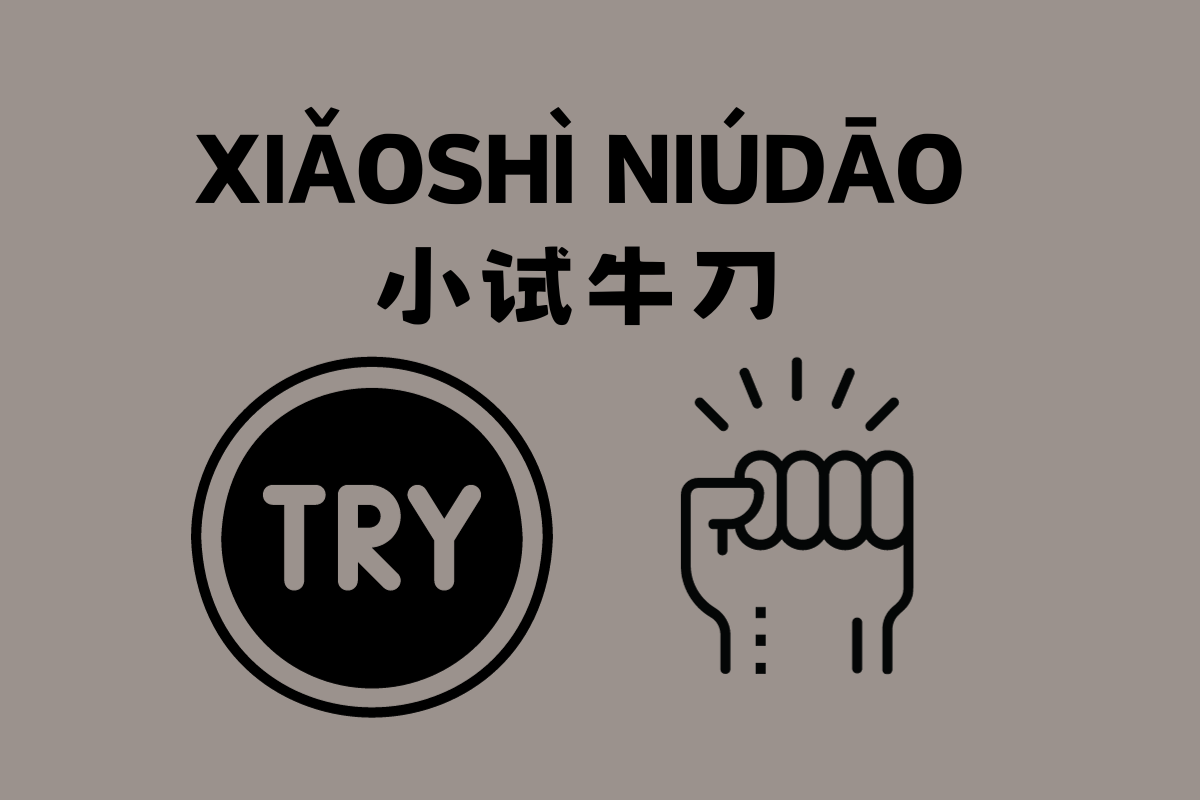
"小试牛刀" (xiǎoshì niúdāo) is a popular Chinese idiom that translates to "testing the waters." This phrase carries the meaning of trying something new or attempting a new skill with caution and prudence. In this article, we will 探索(tàn sùo)explore the origin of this idiom, its meaning, its significance in modern life, and provide three simple sentences using "小试牛刀."
探索(tàn sùo),verb,explore
She loves to explore new places when she travels.
她喜欢在旅行时探索新的地方。
Tā xǐhuān zài lǚxíng shí tànsuǒ xīn de dìfāng.
Scientists explore the depths of the ocean to discover new species.
科学家们探索海洋深处以发现新物种。
Kēxuéjiāmen tànsuǒ hǎiyáng shēnchù yǐ fāxiàn xīn wùzhǒng.
Origin of the Idiom:
The origin of the idiom "小试牛刀" can be traced back to ancient China. It is associated with a story about a legendary warrior named Yan Qing. Yan Qing was known for his exceptional sword-fighting skills and had earned a reputation as one of the most skilled warriors of his time. One day, while traveling, he came across a river. Seeing that the river was not too deep and the currents were not too strong, he decided to test his sword-fighting skills by using his sword to try and catch fish.
The Story:
In the story, Yan Qing waded into the river and began slashing his sword at the fish. To his surprise, he found that his usual skills were of no use in this situation. The fish, although seemingly easy to catch, eluded him time and again. After some time, Yan Qing realized that he needed to adapt his techniques and develop new skills specific to catching fish. He changed his approach, slowed down, and started observing the fish's movements. Gradually, he became more successful and was able to catch several fish.
The Meaning:
From this story, the idiom "小试牛刀" was born. It emphasizes the importance of 测试(cèshì)testing one's abilities cautiously, even if they are highly skilled in another area. It encourages individuals to approach new challenges with humility and adaptability, understanding that success in one field does not guarantee success in another. It also signifies the need to adapt one's skills and strategies to suit the specific circumstances.
测试(cèshì),verb,testing
They conducted testing to ensure the product's quality.
他们进行了测试以确保产品的质量。
Tāmen jìnxíngle cèshì yǐ quèbǎo chǎnpǐn de zhìliàng.
Testing your knowledge regularly can lead to better results.
定期测试你的知识可以获得更好的结果。
Dìngqī cèshì nǐ de zhīshi kěyǐ huòdé gèng hǎo de jiéguǒ.
I decided to test the waters and try rock climbing for the first time.
我决定小试牛刀,第一次尝试攀岩。
Wǒ juédìng xiǎoshì niúdāo, dì yīcì chángshì pānyán.
She's going to test the waters by applying for that challenging job.
她要小试牛刀,申请那个具有挑战性的工作。
Tā yào xiǎoshì niúdāo, shēnqǐng nàgè jùyǒu tiǎozhàn xìng de gōngzuò.
Let's test the waters with a new recipe for dinner tonight.
今晚我们试试小试牛刀,做一个新菜谱。
Jīnwǎn wǒmen shìshì xiǎoshì niúdāo, zuò yīgè xīn càipǔ.