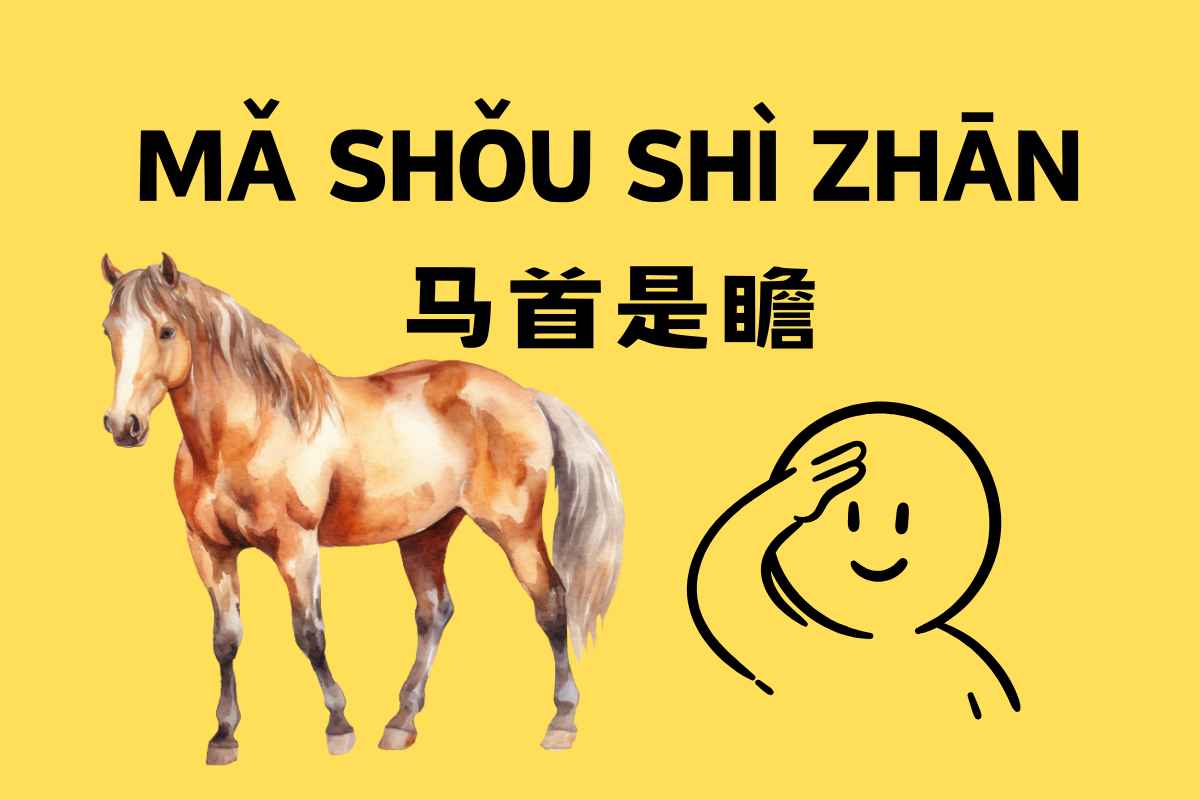
"马首是瞻" (mǎ shǒu shì zhān) is an ancient Chinese idiom originating from the Warring States period. According to legend, there was a military commander who ordered his soldiers to set up their tents next to the enemy's horse pens every night while on the march. This seemed like an unusual command, and the soldiers began to question it.However, the commander did not explain but insisted on this decision, telling his soldiers, "马首是瞻" (mǎ shǒu shì zhān), which means, "the horse's head is the key." It暗示(ànshì) implied that by being in this position, the soldiers would be more vigilant and cautious.Soon after, the enemy attacked their camp. Because the soldiers could hear the neighing of the enemy's horses every night, they were prepared and successfully repelled the attack. The commander's strategy ultimately helped them achieve victory.
暗示(ànshì),adj,implied
The teacher didn't say it directly, but she implied that studying regularly is important.
老师没有直接说,但她 暗示 学习要定期进行。
Lǎoshī méiyǒu zhíjiē shuō, dàn tā ànshì xuéxí yào dìngqī jìnxíng.
His smile implied that he was content with the result.
他的微笑 暗示 他对结果感到满意。
Tā de wéixiào ànshì tā duì jiéguǒ gǎndào mǎnyì.
The Inspiration
The story of "马首是瞻" conveys an important lesson: sometimes, we cannot rely solely on surface information or conventional thinking and must look beyond traditional approaches. The story emphasizes the importance of caution and vigilance, even when something appears unconventional.
The Meaning of the Phrase
"马首是瞻" (mǎ shǒu shì zhān) means that we should not only focus on what is obvious but also pay attention to less conspicuous but potentially more critical details. This idiom underscores comprehensive observation and holistic thinking.
Application in Modern Times
"马首是瞻" (mǎ shǒu shì zhān) is equally relevant in modern society. In personal life, this phrase reminds us to think carefully when making decisions, not just to see the surface but to consider various factors that may impact the outcome.In the business environment, this concept is also highly valuable. Leaders and business professionals need to consider various factors, including 风险(Fēngxiǎn)risks and less obvious opportunities, when formulating strategies and decisions.
风险(Fēngxiǎn),non,risks
Taking calculated risks can lead to great rewards.
冒一定的风险可能会带来巨大的回报。
Mào yīdìng de fēngxiǎn kěnéng huì dàilái jùdà de huíbào.
This journey is full of risks.
这趟旅程充满风险。
Zhè tàng lǚchéng chōngmǎn fēngxiǎn.
They all look to the team leader as the key.
他们都以组长马首是瞻。
Tāmen dōu yǐ zǔzhǎng mǎshǒu shì zhān.
I understand the meaning of 'look to the team leader’.
我明白了马首是瞻的意思。
Wǒ míngbái le mǎshǒu shì zhān de yìsi.
When solving problems, ' look to the team leader' helps avoid omissions.
解决问题时,马首是瞻避免遗漏。
Jiějué wèntí shí, mǎshǒu shì zhān bìmiǎn yílòu.