
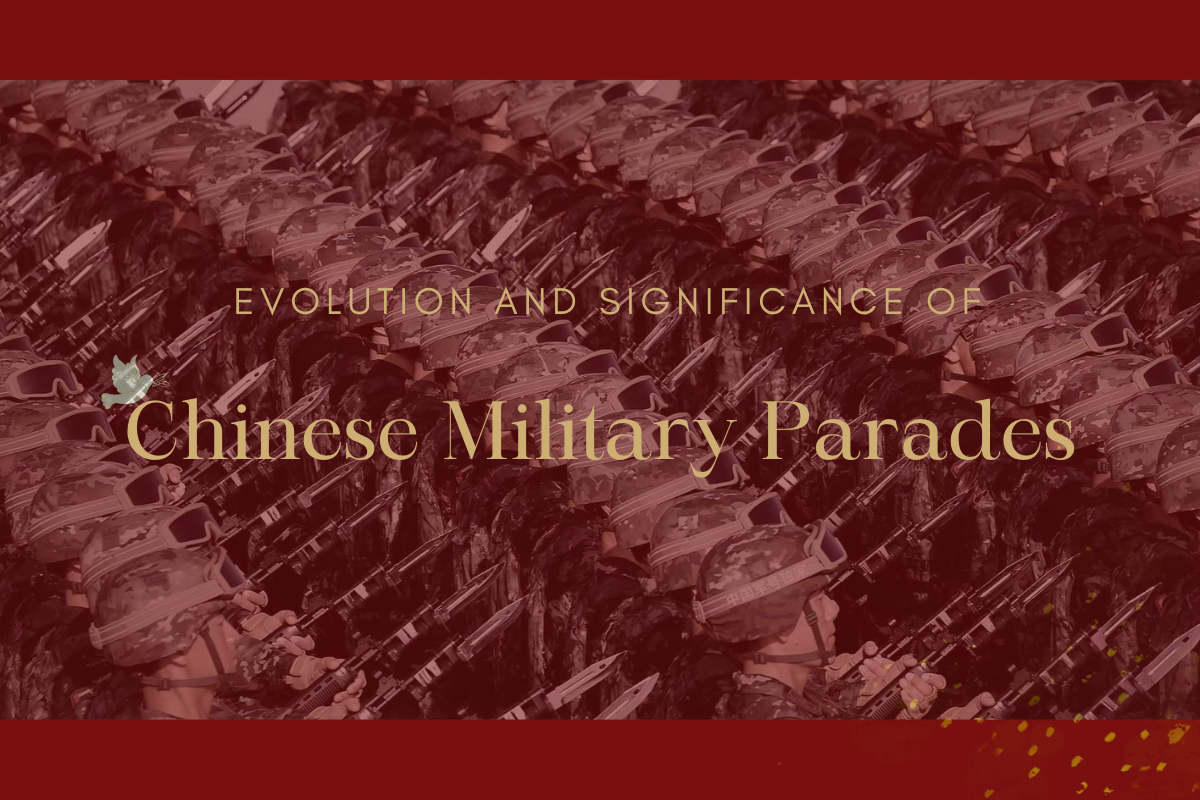
On September 3, 2025, the Tiananmen Square in Beijing hosted a grand military parade 阅兵(yuè bīng) commemorating the 80th anniversary of the victory in the Chinese People's War of Resistance Against Japanese Aggression and World Anti-Fascist War. This parade marked the initiation of a new phase in China's modernization drive and showcased a wide array of new military equipment, emphasizing the formidable strength and modernized outlook of the Chinese military.
阅兵(yuè bīng),noun,military parade
Example:
- The military parade was very impressive.
阅兵式非常壮观。
yuè bīng shì fēi cháng zhuàng guān. - We watched the military parade on National Day.
我们在国庆节观看了阅兵。
wǒ men zài guó qìng jié guān kàn le yuè bīng.
Looking Back at the Evolution of Chinese Military Parades
Chinese military parades boast a rich historical heritage. As far back as November 7, 1931, during the founding of the Central Revolutionary Government of the Chinese Soviet Republic, the first military parade was held in Ruijin, Jiangxi Province, marking the initiation of a tradition of military parades for the people's army. The grand parade during the founding ceremony of the People's Republic of China in 1949 was the first large-scale military parade after the establishment of the new China and presented a lineup featuring mainly equipment sourced from various countries (such as Japanese and American weapons), symbolically declaring the birth of the new China to the world. Subsequent parades in 1959, 1984, 1999, 2009, and the 80th anniversary parade in 2025 witnessed a steady increase in the domestic production rate of equipment and the emergence of new equipment like the J-20 stealth fighter, Shandong aircraft carrier, and Dongfeng-41 missile, showcasing the remarkable transformation of the Chinese military from “less steel and more spirit” to “more steel and even more spirit.”
Core Elements of Chinese Military Parades
Chinese military parades adhere to the classical sequence of "Parade + Review," with one being static and the other in motion, harmonizing to create a grand display.
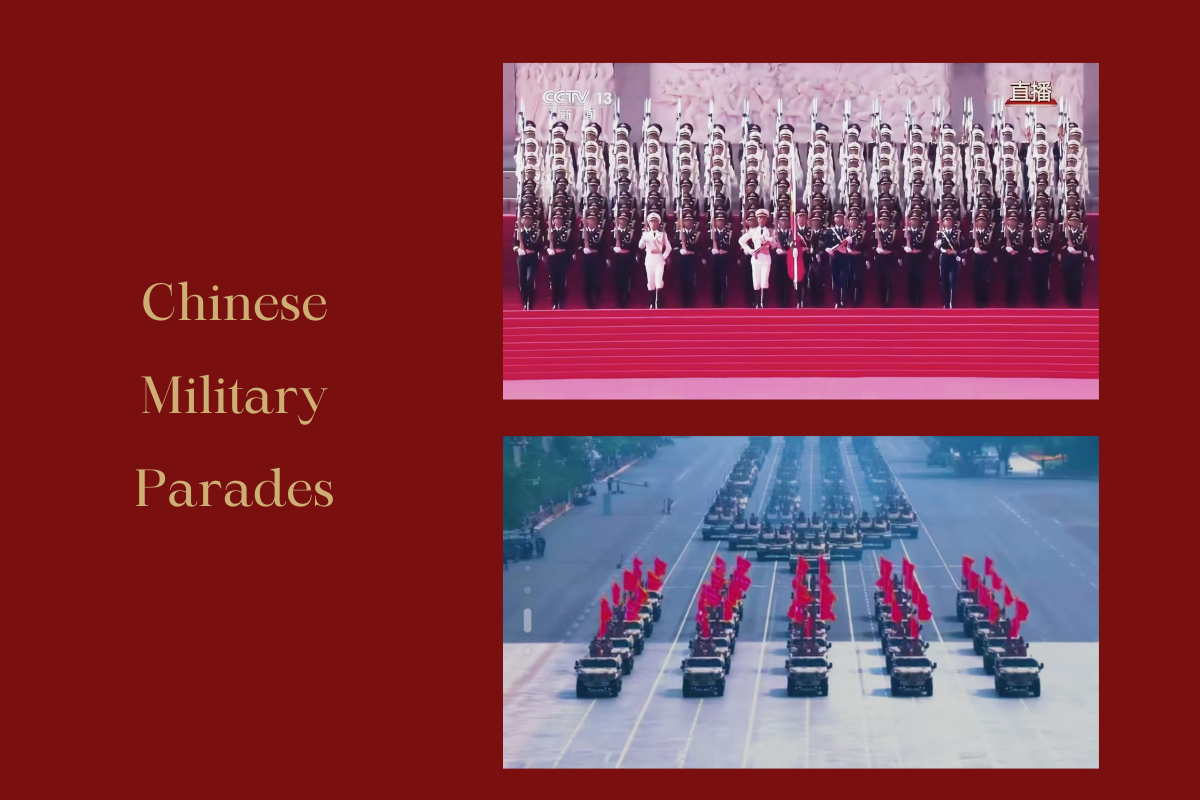
The Parade: Dignitaries ride in vehicles along Chang'an Avenue, inspecting the various military formations. It is customary for the dignitaries to greet the troops with "Hello, comrades," to which the soldiers respond in unison, "Hello, Chairman," demonstrating the strict hierarchy within the military and the absolute loyalty of the soldiers to the Party and the people.
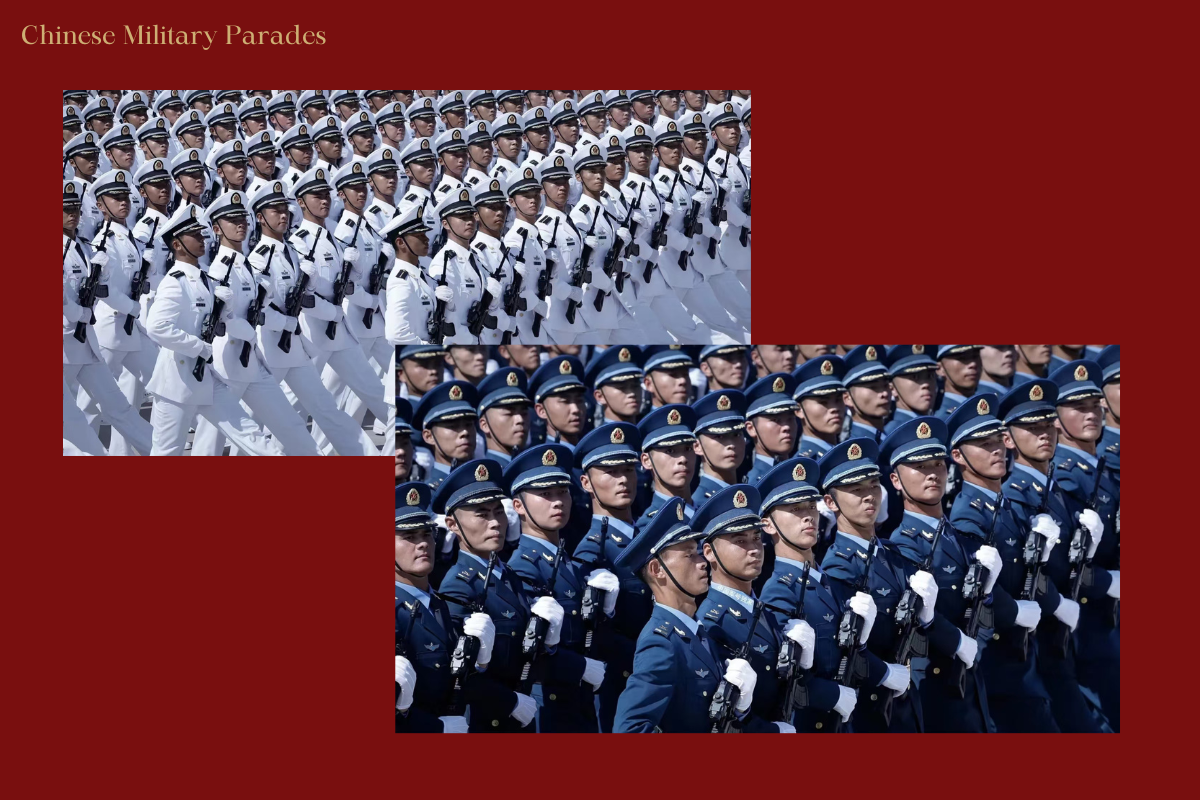
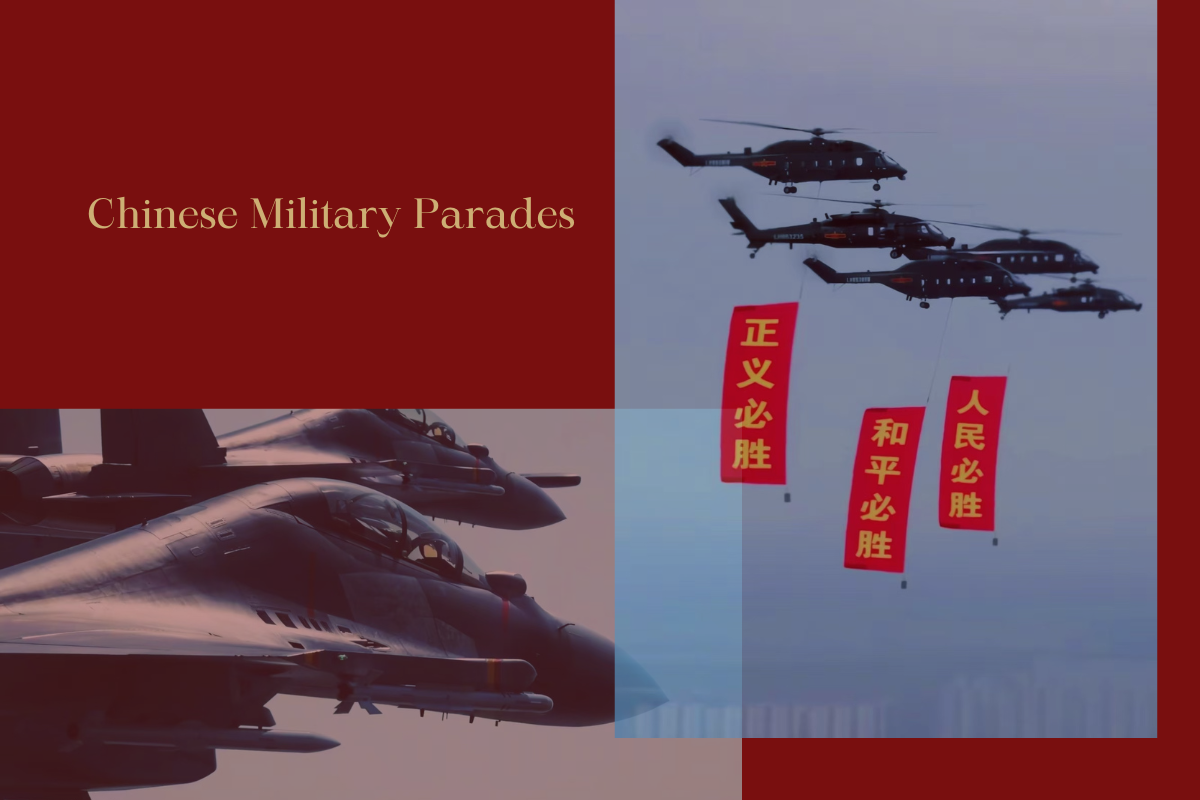
The Review: It is the dynamic highlight of the parade as the military units pass through Tiananmen Square in the sequence of "Aerial Flag Guards → Infantry Formations → Banner Units → Equipment Formations → Aerial Formations." The Infantry Formations are renowned for their precision and uniformity, often described as "thousands moving as one" (with soldiers maintaining straight lines in their formations and footsteps impeccably synchronized). The Equipment Formations are organized in combat-ready units (such as land-based combat groups, naval combat groups, unmanned combat groups), showcasing the military's joint operational capabilities. The Aerial Formations comprise early warning aircraft, fighter jets, bombers, amongst others, with the roar of their engines tearing through the sky serving as a defining moment of the parade.

The Unique Charms of "Chinese-Style Military Parades"
"Chinese-style military parades" have become a unique symbol on the global military stage, characterized by "discipline, awe, and transparency."
Stringent Queue Discipline: Soldiers undergo months, or even years, of rigorous training, ensuring every movement is executed with utmost precision. For instance, the "Three-stage Rifle Drill" during the 1984 National Day Parade, with bayonets gleaming, remains a classic moment in the hearts of military enthusiasts. In the run-up to the 2025 parade, advancements in technology such as Beidou positioning and intelligent assessment were employed to enhance training quality and effectiveness to ensure impeccable performance.
Impressive Equipment Showcase: The transition from "Made in Various Countries" to "Made in China" reflects the rise of China's defense industry. The 2025 parade witnessed the debut of strategic land, sea, and air assets, hypersonic weapons, and unmanned combat equipment, fully displaying the modernized capabilities of the Chinese military.
High Strategic Transparency: By voluntarily disclosing parade details such as equipment models and formations, China demonstrates confidence in its capabilities. Unlike some countries that use military parades as muscle flexing exercises, China aims to convey its commitment to peace and non-expansion, promoting a strategic mindset that emphasizes "the ability to fight is the best deterrent."
Profound Spiritual Inheritance: The banner units in each parade serve as "symbols of spirit," carrying the legacy of revolutionary martyrs like the "Five Heroes of Langya Mountain" and the "Battle Heroes of Liangshan Mountain." The participation of veteran troops from the War of Resistance Against Japanese Aggression in the 2025 parade continues the legacy of the army's "obeying Party command, being capable in combat, and maintaining high morale."
From "Demonstrating Strength" to "Promoting Peace 和平(hé píng)": The Era's Significance
和平(hé píng),noun,peace
Example:
- World peace is our common wish.
世界和平是我们共同的愿望。
shì jiè hé píng shì wǒ men gòng tóng de yuàn wàng. - The dove symbolizes peace.
鸽子象征和平。
gē zi xiàng zhēng hé píng.
Remembering History: By commemorating victories in the War of Resistance Against Japanese Aggression and the establishment of the People's Republic of China, these parades serve as reminders not to forget the historical lessons of "falling behind leading to suffering" and to cherish the hard-won peace.
Showcasing Strength: Advanced military equipment is not only the country's backbone for safeguarding sovereignty, security, and development interests but also solid proof of the Chinese military's capability to fight and win battles.
Promoting Peace: Chinese military parades are not targeted at any specific country but instead aim to demonstrate that "China is always a builder of world peace." The participation of foreign contingents in the 2015 parade and the presence of international leaders and friends in the 2025 parade send the message of China's resolve to maintain the achievements of World War II and promote the construction of a community with a shared future for mankind.
Chinese military parades serve as a grand national event that combines historical glory, modern prowess, and future prospects. They not only serve as a comprehensive test of the achievements in the development of the People's Army but also provide patriotic education to the nation while serving as an important window to exhibit China's ideals of peaceful development and its responsible image as a major global power.