
The Dunhuang Murals, located in the Mogao Caves, are renowned for their vibrant colors, intricate details, and depictions of Buddhist art. These murals reflect the cultural exchange along the Silk Road and serve as a testament to ancient Chinese art and history. The following phrases will help you engage in meaningful conversations about the murals and their significance.
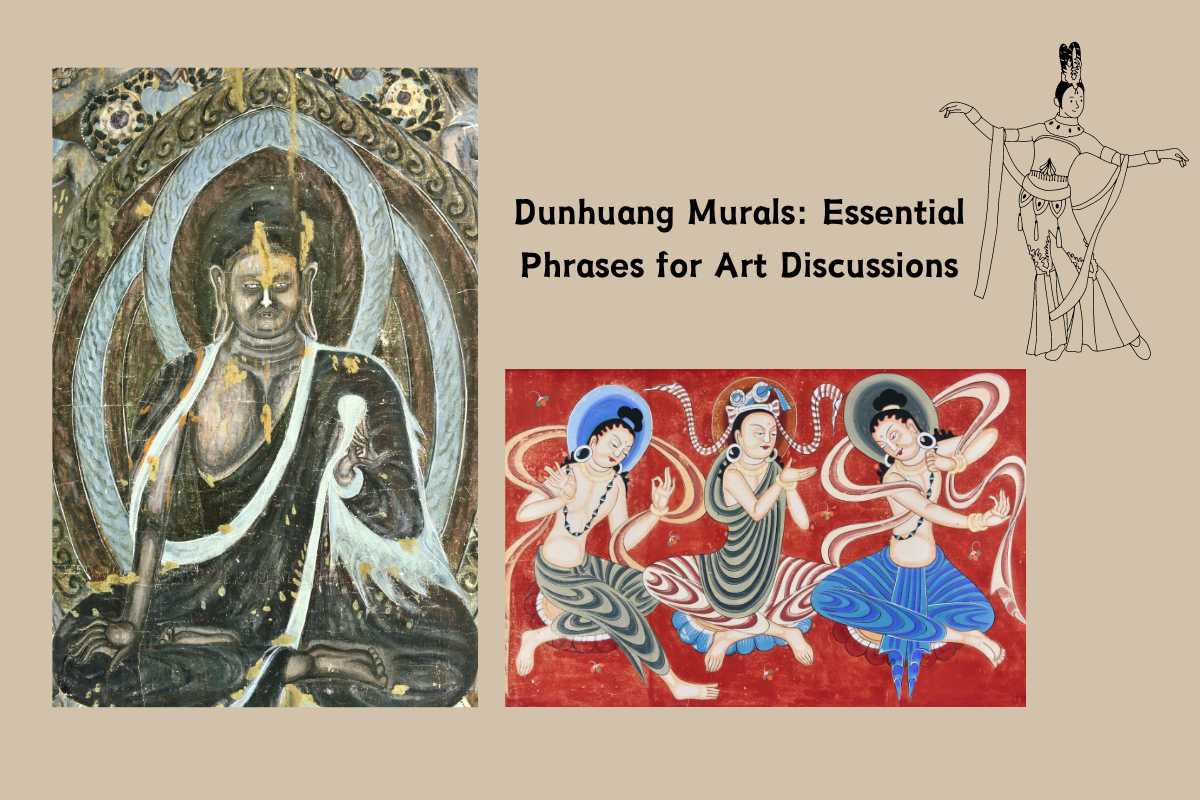
Scene 1: Asking About the Murals’ History
When were these murals painted?
这些壁画是什么时候绘制的?
Zhèxiē bìhuà shì shénme shíhòu huìzhì de?
They were painted between the 4th and 14th centuries.
这些壁画是在公元四世纪到十四世纪之间绘制的。
Zhèxiē bìhuà shì zài gōngyuán sì shìjì dào shísì shìjì zhījiān huìzhì de.
What is the main theme of the murals?
这些壁画的主题是什么?
Zhèxiē bìhuà de zhǔtí shì shénme?
The main theme is Buddhist teachings.
主要的主题是佛教教义。
Zhǔyào de zhǔtí shì Fójiào jiàoyì.
Scene 2: Talking About the Art Style
The colors are still very bright.
颜色还很鲜艳。
Yánsè hái hěn xiānyàn.
Yes, they used natural pigments.
是的,他们用了天然颜料。
Shì de, tāmen yòngle tiānrán yánliào.
Why are some parts damaged?
为什么有些部分受损了?
Wèishénme yǒuxiē bùfèn shòusǔn le?
Because of age and weather over time.
因为时间和气候的影响。
Yīnwèi shíjiān hé qìhòu de yǐngxiǎng.
Scene 3: Describing Specific Scenes
What is shown in this mural?
这幅壁画上画的是什么?
Zhè fú bìhuà shàng huà de shì shénme?
It shows a Buddha teaching.
这幅画描绘了佛陀在讲道。
Zhè fú huà miáohuìle Fótuó zài jiǎngdào.
Are those people listening to him?
那些人在听他讲吗?
Nàxiē rén zài tīng tā jiǎng ma?
Yes, they are his followers.
是的,他们是他的信徒。
Shì de, tāmen shì tā de xìntú.