
Guilin, known for its picturesque landscapes, is a city in southern China with a profound cultural heritage.Guilin has a long history and rich cultural heritage. On this land, many historical sites and cultural relics have been preserved, such as ancient city walls, temples, and traditional dwellings. Tourists can visit historical and cultural landmarks like Guilin Museum and Liberation Bridge to gain insights into the city's history and cultural background.
Pronunciation and Chinese Language Learning:
When discussing Guilin in Chinese, it is pronounced as 桂林 (Guì Lín). Practicing the pronunciation of Guilin in Chinese can be a fun way to improve language skills.
Travel and Natural Beauty:
Guilin is renowned for its breathtaking karst landscapes, lush greenery, and winding rivers. Visitors can explore scenic spots like 漓江 (Lí Jiāng) (Li River) and 阳朔 (Yáng Shuò) (Yangshuo), where every view seems like a painting come to life. The stunning landscapes have inspired countless poets and artists throughout history.
Historical Significance:
With a history of over two thousand years, Guilin has witnessed the rise and fall of various dynasties, leaving behind a rich historical tapestry. Exploring 象鼻山 (Xiàng Bí Shān) (Elephant Trunk Hill) and 临桂区 (Lín Guì Qū) (Lingui District), travelers can glimpse into the city's historical significance.
Local Specialties and Cuisine:
Guilin boasts a unique culinary culture, with dishes like 米粉 (mǐ fěn) (Rice Noodles) and 桂林米粉 (Guì Lín mǐ fěn) (Guilin Rice Noodles) being must-try delicacies. The local cuisine is flavorful, often incorporating ingredients like chili, garlic, and various spices to create mouthwatering dishes.
Cultural Customs:
Guilin's cultural customs are deeply rooted in traditional Chinese practices. For example, during the 端午节 (Duān Wǔ Jié) (Dragon Boat Festival), locals participate in dragon boat races and eat 粽子 (zòng zi) (rice dumplings) to celebrate. These customs provide a glimpse into the city's cultural richness.

"桂 (Guì)":
The character "桂" has the fourth tone (high tone).
When pronouncing it, start with a high-tone "Guì," and then transition the tone from high to low, creating the pronunciation "Guì." During the pronunciation, be mindful not to tense your lips too much, and lightly touch the tip of your tongue to the upper front teeth.
"林 (Lín)":
The character "林" has the second tone (rising tone).
When pronouncing it, maintain a steady tone, saying a slightly high-toned "lí," and keep the tone level throughout, forming the pronunciation "lín." Pay attention to lightly touch the tip of your tongue to the upper front teeth.
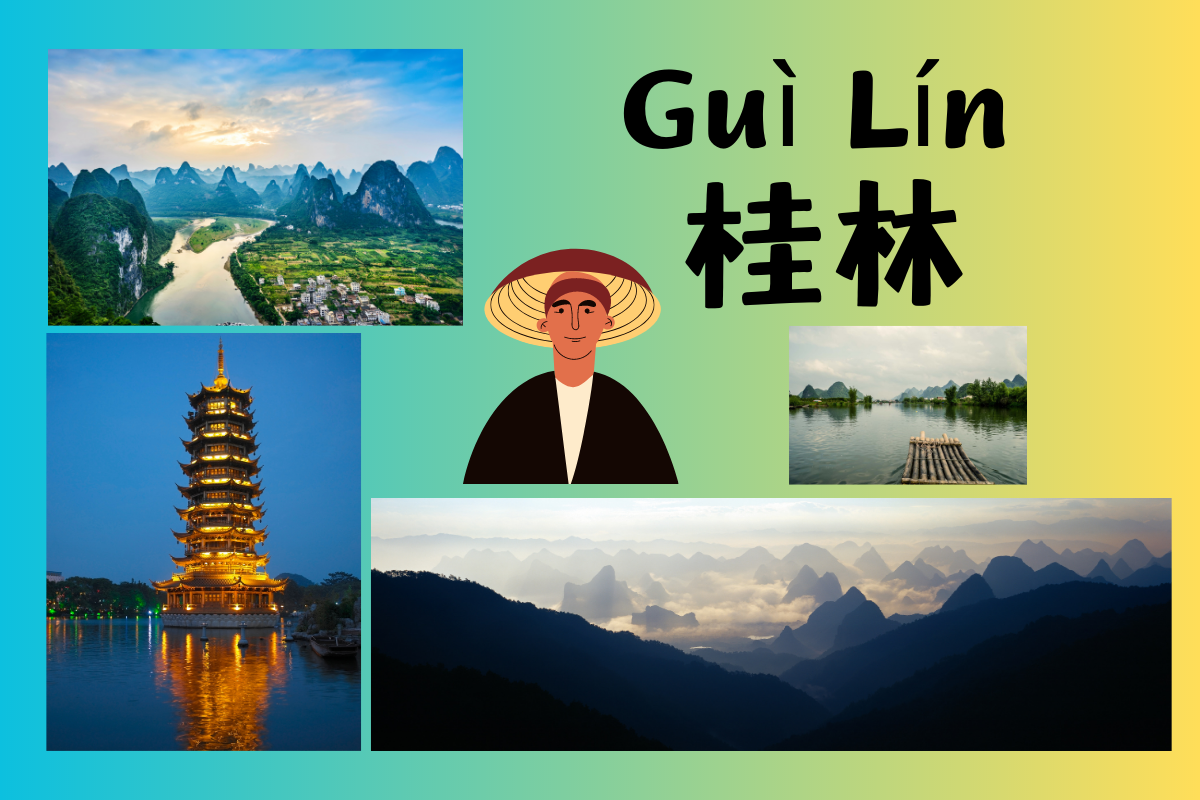
I am planning a trip to Guilin to witness its breathtaking landscapes.
我计划去桂林欣赏它壮丽的风景。
Wǒ jìhuà qù Guì Lín xīnshǎng tā zhuànglì de fēngjǐng.
Guilin's unique rice noodles are known for their delicious taste.
桂林独特的米粉以其美味而闻名。
Guì Lín dútè de mǐ fěn yǐ qí měiwèi ér wénmíng.
During the Dragon Boat Festival, people in Guilin enjoy dragon boat races and eat rice dumplings.
在端午节期间,桂林的人们会参加龙舟比赛并品尝粽子。
Zài Duān Wǔ Jié qījiān, Guì Lín de rénmen huì cānjiā lóngzhōu bǐsài bìng pǐncháng zòng zi.