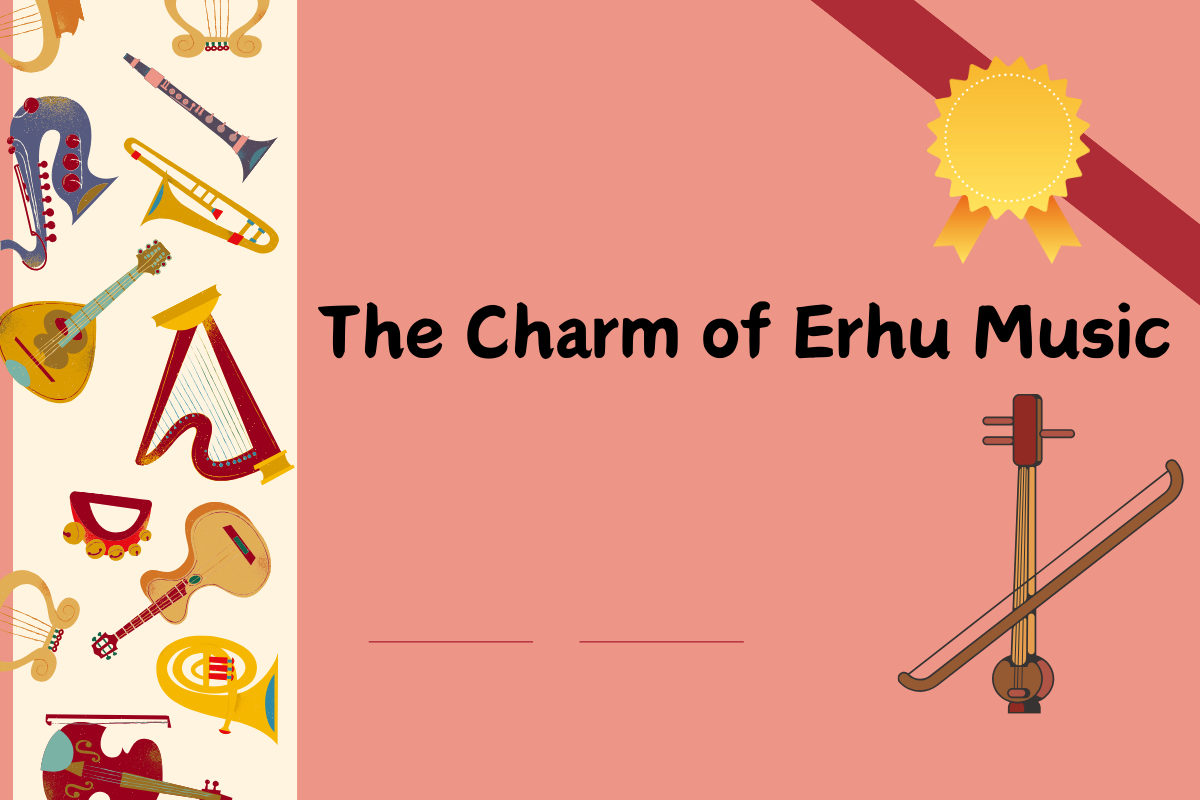
The erhu, a traditional Chinese string instrument with a history spanning centuries, exudes a captivating charm that transcends cultural boundaries. In this blog post, we delve into the enchanting world of erhu music, exploring its unique sound, cultural significance, and enduring appeal.
Captivating Sound
The erhu's hauntingly beautiful sound, often likened to the human voice, has captivated audiences for generations. With its two strings and resonant wooden body, the erhu produces a rich and expressive tone that can evoke a wide range of emotions. From melancholy melodies 旋律(xuánlǜ)to lively folk tunes, the erhu's versatility and emotive power make it a beloved instrument in both traditional and contemporary music.
旋律(xuánlǜ),noun,melodies
- She enjoys playing beautiful melodies.
她喜欢弹奏美妙的旋律。
Tā xǐhuān dànzhòu měimiào de xuánlǜ. - The melody of this song is enchanting.
这首歌的旋律令人陶醉。
Zhè shǒu gē de xuánlǜ lìngrén táozuì.

Cultural Heritage
Rooted in Chinese folklore and tradition, the erhu holds a special place in Chinese culture. It has been featured prominently in various forms of Chinese music, including classical, folk, and opera. Whether performed as a solo instrument乐器(yuèqì) or as part of an ensemble, the erhu carries with it the rich tapestry of Chinese history and heritage, serving as a cultural ambassador to the world.
乐器(yuèqì),noun,instrument
- I can play various instruments.
我会弹奏各种乐器。
Wǒ huì dànzhòu gèzhǒng yuèqì. - There are many different instruments in this band.
这个乐队里有很多不同的乐器。
Zhège yuèduì lǐ yǒu hěnduō bùtóng de yuèqì.
Enduring Appeal
Despite the passage of time and changing musical trends, the allure of erhu music remains undiminished. Its timeless melodies and evocative sounds continue to resonate with audiences worldwide, transcending language and cultural barriers. Modern musicians are exploring new ways to incorporate the erhu into contemporary music, ensuring that its legacy will endure for generations to come.
- He performed a beautiful erhu piece at the concert.
他在音乐会上演奏了一首美妙的二胡曲。
Tā zài yīnyuèhuì shàng yǎnzòule yī shǒu měimiào de èrhú qǔ. - I am learning how to play the erhu.
我正在学习如何弹奏二胡。
Wǒ zhèngzài xuéxí rúhé dànzhòu èrhú. - She is skilled at playing the erhu and often performs at concerts.
她擅长演奏二胡,经常在音乐会上表演。
Tā shàncháng yǎnzòu èrhú, jīngcháng zài yīnyuèhuì shàng biǎoyǎn.